


Summer in Lima: A tour of its beaches
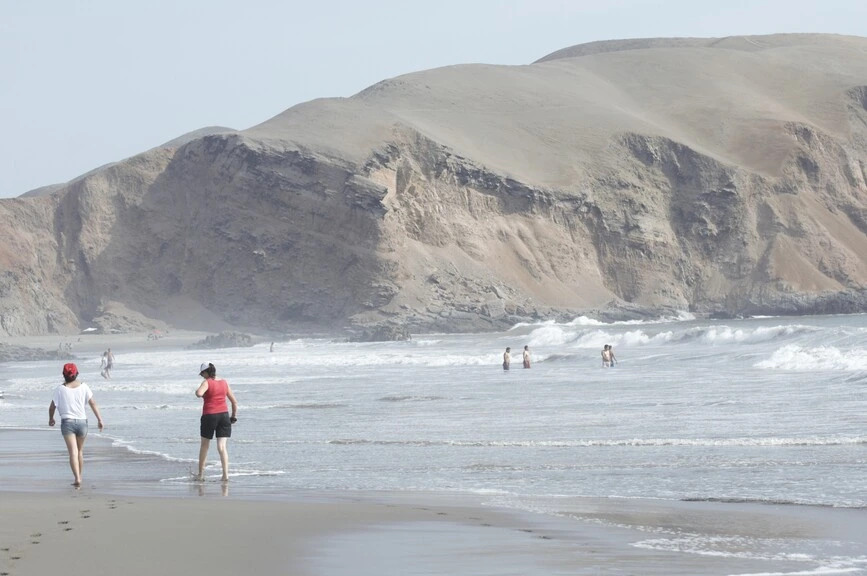
In summer, the people of Lima—not all of them, but certainly many—defy the compass which, as we know, always points towards magnetic north. When the sun begins to blaze over the Peruvian capital, thousands—hundreds of thousands—of its residents “escape” along the Pan-American Highway towards the seaside resorts of the south, where they spread out happily on the sand before or after a memorable swim in the waters of the Pacific.
Breaking the routine. Leaving the metropolis behind. Meeting the sea. Enjoying the sunshine—that elusive sunshine, that absent sunshine, the sunshine that is so deeply missed for much of the year. Lima is grey and misty in autumn, in winter, and even a little in spring. So much so that the writer and humourist Héctor Velarde once joked that its sky has the colour of a donkey’s belly.
The phrase is quite accurate—except from December to March, when the sky clears and brightens. During these months the temperature rises, the heat becomes intense, and the coastline turns into a truly irresistible temptation. After all, one of the great advantages of the “City of Kings” is its closeness to the sea. It is well known that this was one of the reasons behind its Spanish foundation on 18 January 1535.
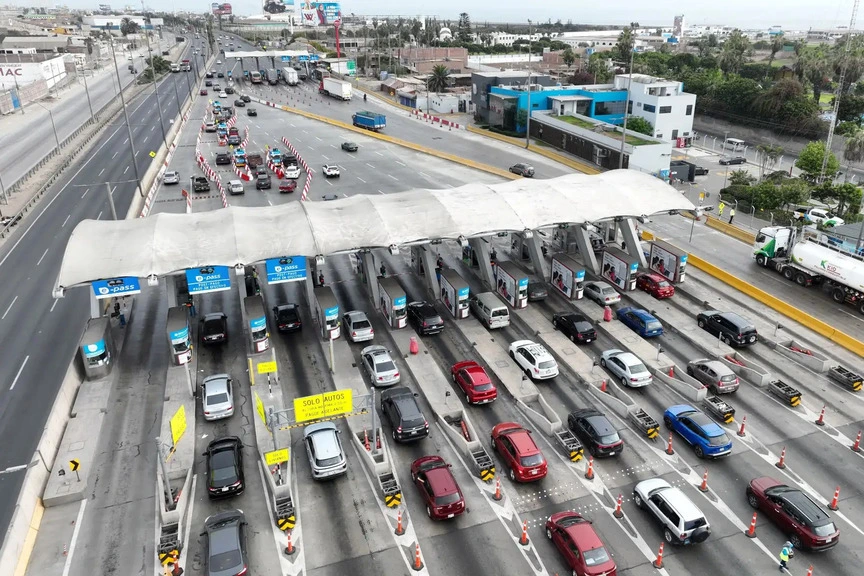
Photo: Agencia Peruana de Noticias Andina
And it’s not as if the conquistador Francisco Pizarro chose the site simply because he fancied spending his summers enjoying the rather chilly waters of Lima’s bay. Perhaps he did at some point — I can’t say for sure. What I do know is that his decision was indeed influenced by the Pacific Ocean. Proof of this is that Callao — the capital’s neighbouring city — would go on to become the main port of the Viceroyalty of Peru and, in fact, of all South America.
Seen this way, it’s no exaggeration to say that Lima is the capital of Peru thanks to the sea. The very same sea that looks spectacular from the cliffs of San Isidro, Miraflores, Barranco and Chorrillos. The same sea you can enjoy along the Costa Verde, the seaside stretch of beaches just a short distance from the Historic Centre of Lima. And the same sea that draws many holidaymakers southwards — openly defying the compass.
The sea is very close.
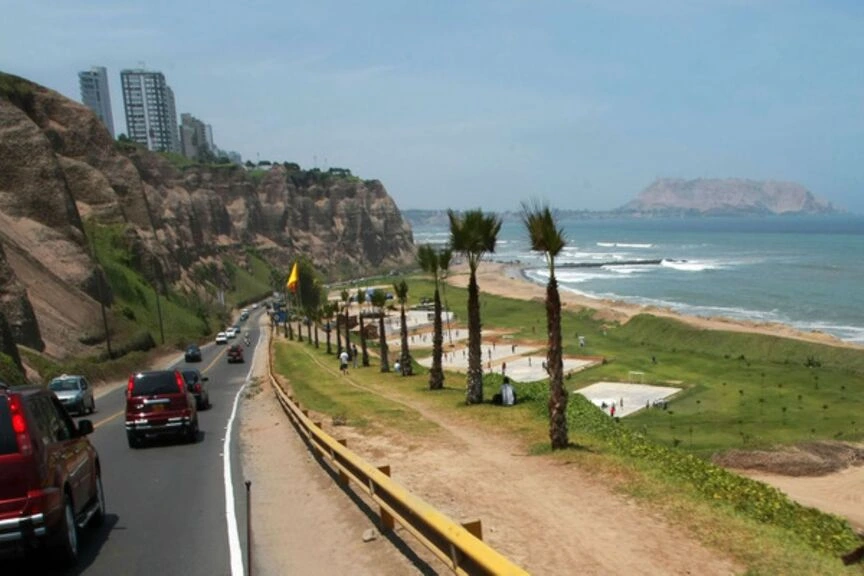
Photo: Agencia Peruana de Noticias Andina
I’m sorry, Mr Francisco Pizarro — I’m going to mention you once again. I do so for the sake of historical accuracy and to avoid any confusion. After all, we wouldn’t want anyone to think that when you arrived at Lima’s bay you were greeted by a string of Caribbean-looking beaches. Quite the opposite. I can imagine your surprise when you realised that the Pacific had hardly any shores at all — or only very narrow ones — thanks to a curtain of enormous cliffs.
These rugged coastal giants rise to nearly 100 metres in height and, because of their steep faces and lack of vegetation, they are almost impossible to scale. Their presence once made it difficult to make full use of the bay. The situation would change in 1970 with the inauguration of the Costa Verde, an urban development project that reclaimed space from the cliffs to create a string of beaches and a paved coastal road.
Over time, the circuit continued to grow and evolve, becoming a lively public space where all sorts of activities take place. It’s not only about quick dips in the sea or lazy naps by the shore. Surfing lessons are held here, people cycle and jog while enjoying the sea breeze, and — well — since Lima, the famous City of the Kings, is renowned for its gastronomy, you’ll also find more than one restaurant along its beaches.
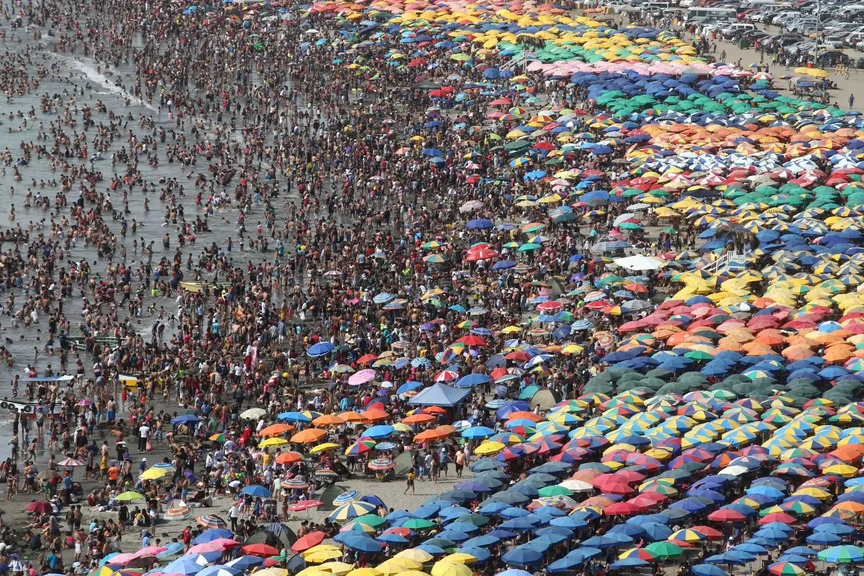
Photo: Agencia Peruanas de Noticias Andina
And although the Costa Verde is attractive all year round, in summer it bursts into colour and activity. A friendly tip: if crowds aren’t your thing, don’t even think about visiting Playa Agua Dulce, the city’s most popular beach. But if you’d like to experience the vibrant pulse of Lima’s multicultural and down-to-earth side, come on a sunny Sunday. I’m quite sure it will leave you wide-eyed with amazement.
You’ve been warned. Now then, if you prefer a little more peace and quiet, try to avoid “heading down” to Lima’s Pacific beaches at the weekend. From Monday to Friday the number of bathers drops considerably. If you have a car — or rent one — it’s a great idea to drive along the entire Costa Verde, which nowadays begins in La Punta, in the Callao Province, and ends in Chorrillos. Along the way it passes through the districts of San Miguel, Magdalena del Mar, San Isidro and Miraflores.
To the north or to the south
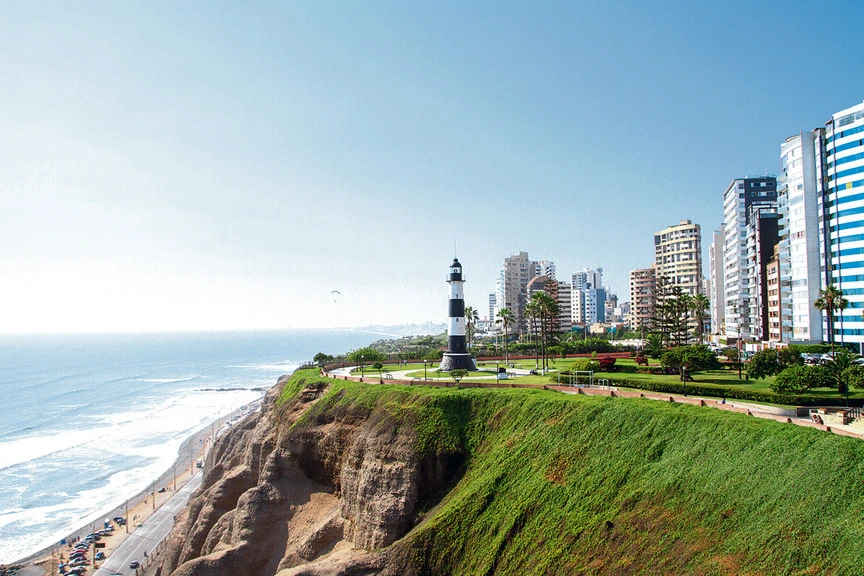
Photo: Olas Perú
Before I explain the open contradiction to the compass that I mentioned earlier, let me tell you that among the beaches of the Costa Verde a few stand out in particular. There’s Playa La Herradura in Chorrillos — ideal for riding the waves and then grabbing a bite in its seaside restaurants. Then there’s Playa Los Yuyos in Barranco — perfect for enjoying its calm waters. And in Miraflores you’ll find Playa Waikiki, Playa Redondo and Playa Makaha — all very easy to reach and especially appealing if you enjoy surfing.
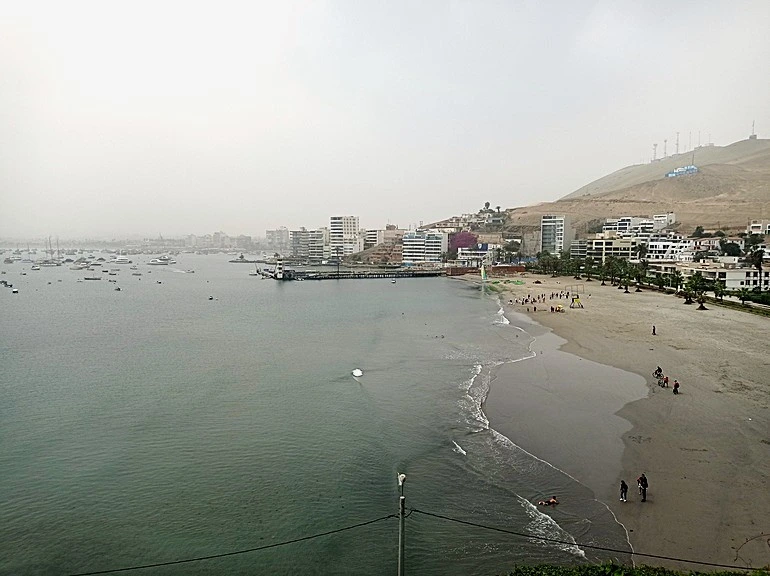
Now it’s time to say goodbye to the Costa Verde, because there’s far more ocean and many more shores waiting to be discovered. It’s time to set off towards the seaside districts on the outskirts of the metropolis. These lie both to the north and to the south and can be reached via the Pan-American Highway. In fact, the summer routes stretch even further, reaching several sun-and-sand destinations in the provinces of the Lima Region.
Let me explain this point — or at least try to — to avoid any confusion. Lima is the capital of Peru and a vast metropolis made up of 43 districts. At the same time, however, Lima is also a region (or department) that includes nine provinces. Two of them — Cañete Province to the south and Huaral Province to the north — lie along the coast and border the city. That’s why many holidaymakers end up “crossing” provincial boundaries in search of those inviting coastal escapes. 🌊
I admit it’s quite a tangle. It’s not my fault — I didn’t draw Peru’s political boundaries. Enough of that. Let’s get back to summer matters. It’s the weekend. Where should you go — north or south? For the people of Lima the answer is usually clear: south, and very much to the south. “The beaches are cooler,” “the waves are great,” and “there’s loads of fun to be had” are the main reasons you’ll hear.
Of course, it’s a matter of taste, because the north has its charms too. If you feel like following the compass, visit Ancón, which in the late 19th and early 20th centuries was the most exclusive seaside resort in the country. Today, part of that brilliant past can still be seen. Other options include Chacra and Mar, Puerto Chancay and Playa Chorrillos de Chancay, all located in Huaral Province (around 75 km from Lima along the Pan-American Highway North).
Asia is in Lima
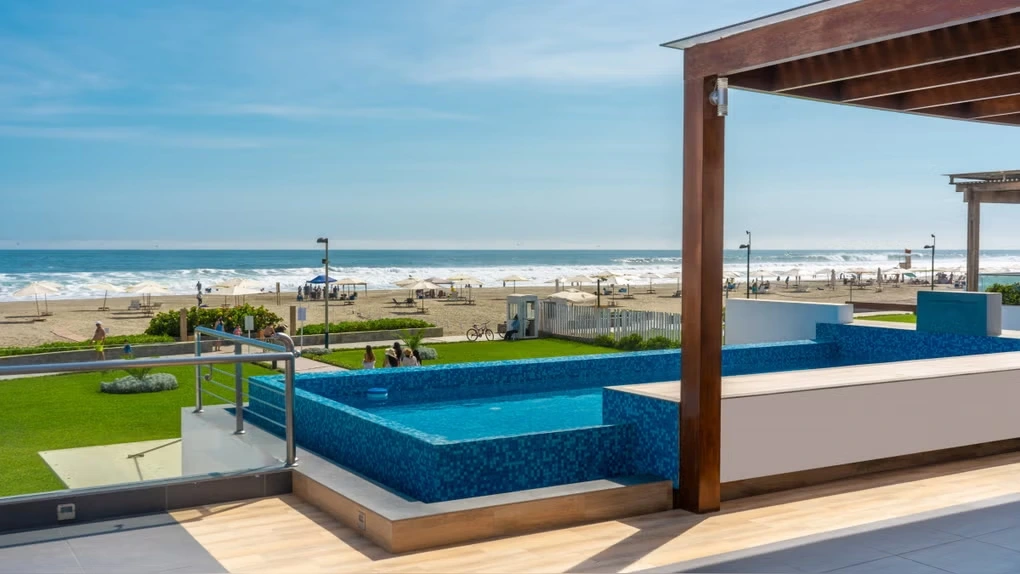
Photo: Grupo Taurus
Summer in the south of Lima. Summer at Playa El Silencio (km 38), where families enjoy themselves on the white sand and in its calm waters; Punta Hermosa (km 42), known for its good waves and lively crowd of young beachgoers; Santa María del Mar (km 50), exclusive and elegant; San Bartolo (km 51), a traditional and peaceful seaside resort; and Pucusana (km 57), a vibrant bay where artisanal fishermen share the shore with excellent seafood restaurants.
All of them can be reached via the Pan-American Highway South, and you don’t necessarily need a car to visit them. Public transport makes getting there fairly easy and, thanks to their proximity, it’s perfectly possible to go and return on the same day. The beaches mentioned here are just a few examples. There are many more along the metropolitan coast and plenty more in Cañete Province, where you’ll find Asia — perhaps the ultimate expression of Lima’s summer lifestyle.
A little look back: towards the end of the 20th century, the coastal desert began to transform around kilometre 100 of the highway. Where there had once been nothing but sand and solitude, gated communities with luxurious houses overlooking a previously ignored sea began to appear. That was when the name of Asia District — once a modest district of fishermen and farmers in Cañete — became synonymous with sun, sea and summer fun.
Asia, todos querían ir a Asia. Un anhelo que se hizo aún mayor al inaugurarse el Sur Plaza Boulevard, un centro comercial con lo mejor de la moda, la gastronomía, el cine y el entretenimiento nocturno en sus bares y discotecas. El océano ya no era el único atractivo. De día y de noche se podía pasarla bien sin alejarse demasiado de la metrópoli. Un destino perfecto para evadirse de las tensiones urbanas.
El mar limeño te espera. ¡Visítalo! No es el Caribe, pero tiene su propio encanto. Te darás cuenta al ver los acantilados de la Costa Verde y la grandeza de un desierto que se “refresca” en las aguas oceánicas. Ese encuentro diferencia al litoral de la única capital sudamericana con playas y balnearios al norte y al sur de su corazón urbano. Tú eliges si sigues a la brújula o la contradices.
Asia — everyone wanted to go to Asia. The desire grew even stronger with the opening of the Sur Plaza Boulevard, a seaside shopping and entertainment complex offering the best in fashion, gastronomy, cinema and nightlife, with its lively bars and discotheques. The ocean was no longer the only attraction. Day or night, you could have a great time without travelling too far from the metropolis — a perfect escape from the stresses of urban life.
The sea of Lima is waiting for you. Come and visit! It may not be the Caribbean, but it has a charm all of its own. You’ll notice it when you see the dramatic cliffs of the Costa Verde and the vastness of a desert that seems to “cool itself” in the ocean’s waters. That meeting of desert and sea sets apart the coastline of the only South American capital with beaches and seaside resorts both to the north and to the south of its urban heart. The choice is yours: follow the compass — or happily contradict it.
March 16, 2026