


Lima: exploring seafood gastronomy
From tradition to bold fusion. From fiery spice to delicate sweetness. From grandmother’s time-honoured recipes to the innovations born in bustling markets, on lively street corners and in world-renowned restaurants.
That’s how diverse, how surprising, how exquisite — and even how colourful — the food of Lima truly is. This is Peruvian cuisine at its finest: a feast waiting for you in a land of tempting aromas and flavours your palate will never forget.
Taste and savour the timeless classics as well as the bold culinary creations born from the daring imagination of cooks and chefs. Step closer to the world of street food, with its colourful and hearty dishes — and then allow yourself to be won over by the artistic finesse of gourmet cuisine. Explore the markets, the food carts, the hidden huariques — and why not? — even the restaurants that proudly rank among the best in the world.
There is something for every taste and every budget. From the exuberant seven colours of the markets — a generous medley of different dishes served on a single plate — to refined tasting menus in five-star dining rooms. From simple breakfasts of bread rolls filled with torreja, avocado or fried egg, sold on street corners, to generous Creole and international buffets served in elegant surroundings.
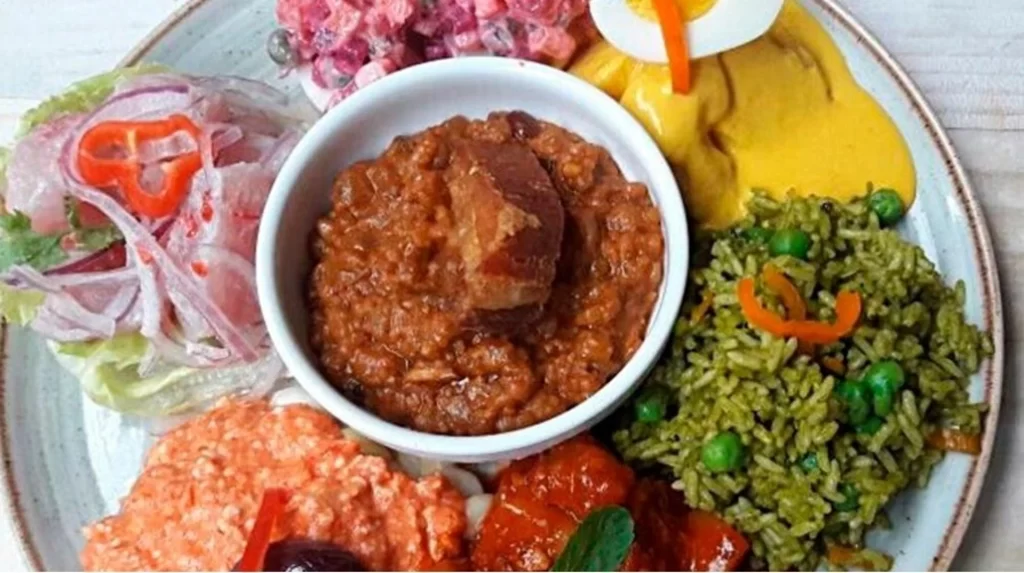
Photo: Screenshot from Gastón Acurio’s social media
Yes, you simply have to taste your way here and there to fully appreciate all the culinary delights of Lima, a city that truly lives by the idea that variety is the spice of life. The old saying that “there’s no accounting for taste” doesn’t quite apply here. Rivers of ink have been devoted to celebrating the experience of trying ceviche, anticuchos, causa limeña, picarones and suspiro a la limeña.
But wait. I’m not about to reel off a list of menus you might find in my city. My aim is different: I want to take you “sailing” through Lima’s seafood cuisine, one of its greatest strengths thanks to its privileged coastal setting. So let me whet your appetite with a selection of soups, starters and main courses you should keep in mind when visiting one of the capital’s many cevicherías.
The “back-to-life” soups
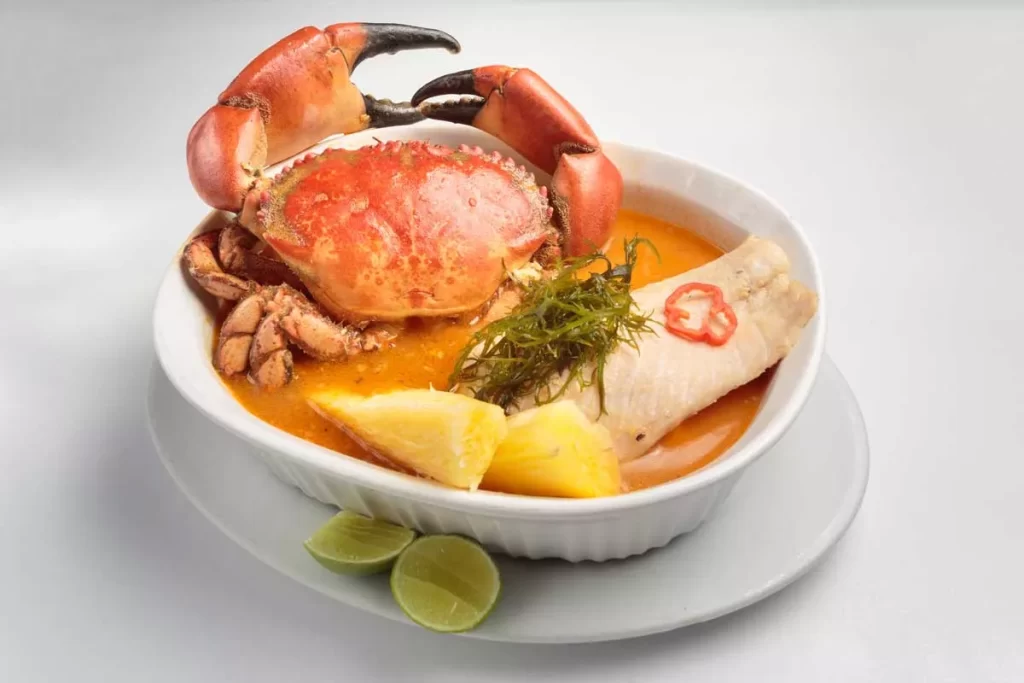
Photo: screenshot from AmigoFoods blog
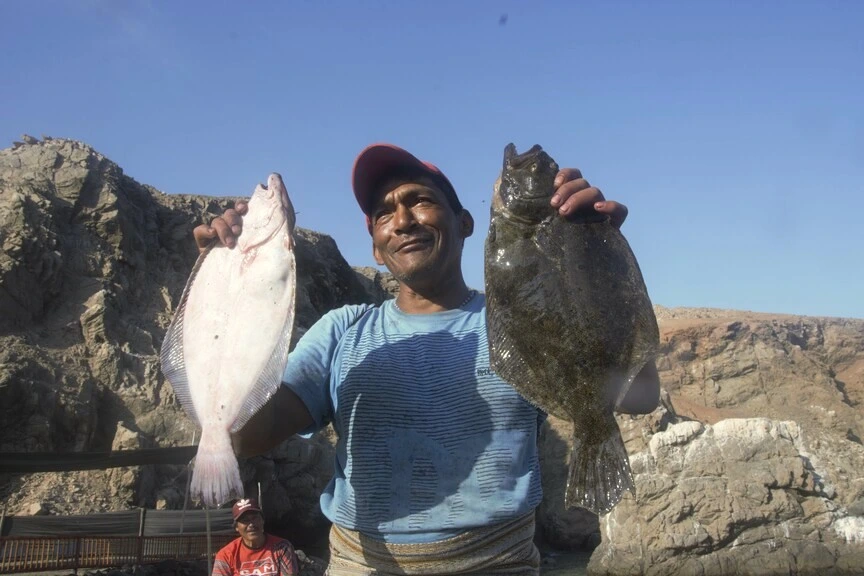
Straight from the waters of the Pacific, the finest Peruvian seafood arrives at your table, thanks to the dedication of artisanal fishermen from the coastal coves of northern and southern Peru. That is the secret — the very essence — of the flavour behind Lima’s much-loved seafood cuisine, enjoyed with enthusiasm in every district of Lima, a city where fish and shellfish are truly revered.
If during your holiday in the “Three Times Crowned City” you urgently need to revive your body and restore your energy — perhaps after a long walk or a lively bohemian night out in Barranco — I recommend two powerful, hearty and steaming levantamuertos (literally, “raise-the-dead” soups). They are so restorative that from the very first spoonful you’ll feel as though even your soul has been strengthened.
Chilcano is a simple yet deeply nourishing broth. In some cevicherías — the generic name for seafood restaurants — it is served as a courtesy, a little “treat” from the chef. This concentrated stock, made from fish heads, backbones and flesh, is seasoned with ginger (kión), garlic, coriander, celery, onion and salt to taste. It is said to have originated in the district of Chilca, in the province of Cañete, within the Lima region.
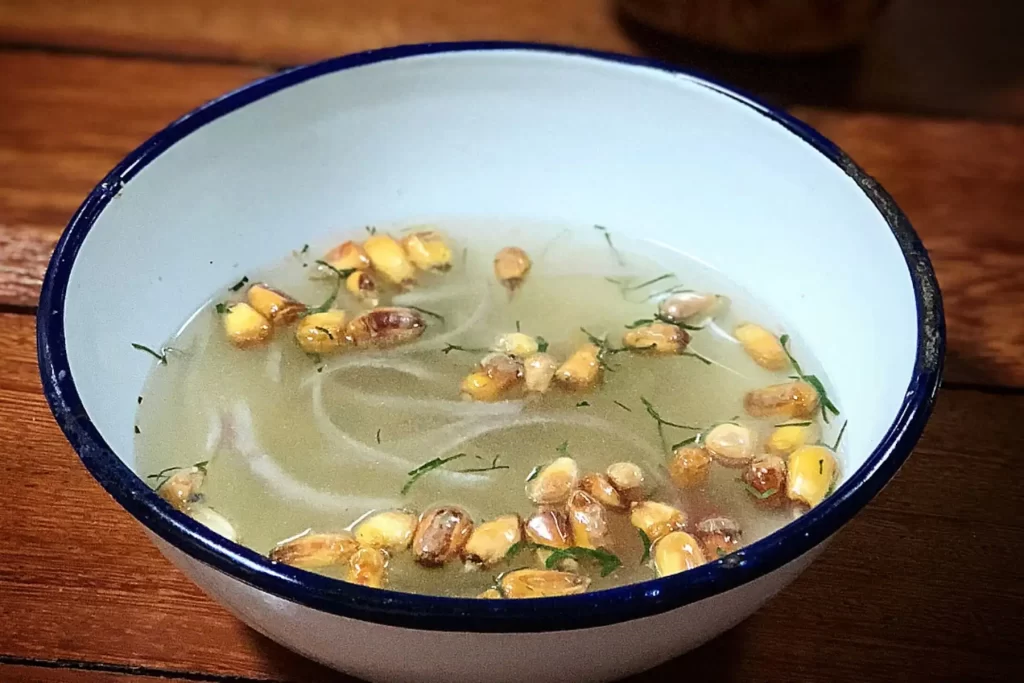
Photo: Screenshot from the Peruvian News Agency Andina
Its high phosphorus and calcium content make chilcano not only comforting, but genuinely nourishing. A similarly reviving effect comes from another soup once prepared by fishermen in the port of Callao, to sustain them through their long and demanding days at sea. They would light their fires using the wooden frames of parihuelas — the platforms on which they carried what they had “harvested” in their nets.
The name lives on in the broth that is now one of the shining stars of seafood menus: the mighty parihuela. This generous soup brings together a representative sample of the ocean’s biodiversity — fish, crab, mussels, scallops, sea snails, prawns, squid and octopus, among other treasures. The recipe is enriched with white wine, chicha de jora, ají panca and ají amarillo. What more could you possibly ask for?
Fiery ceviches and splendid causas
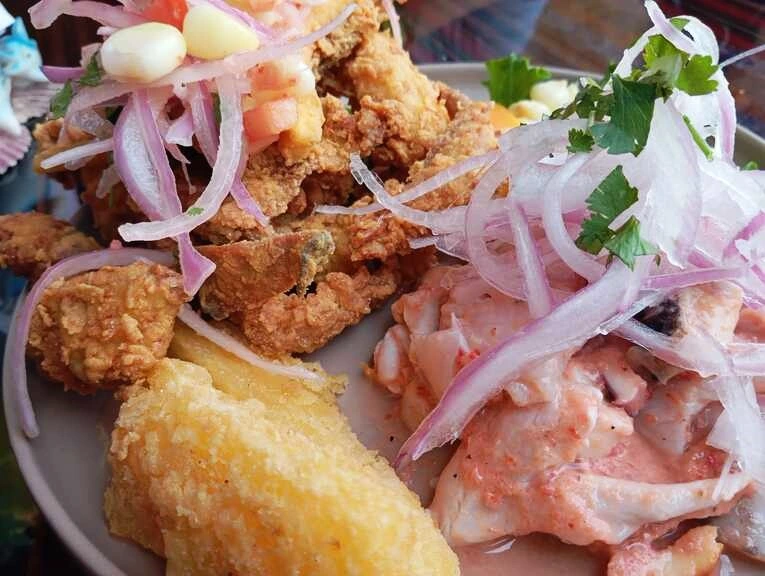
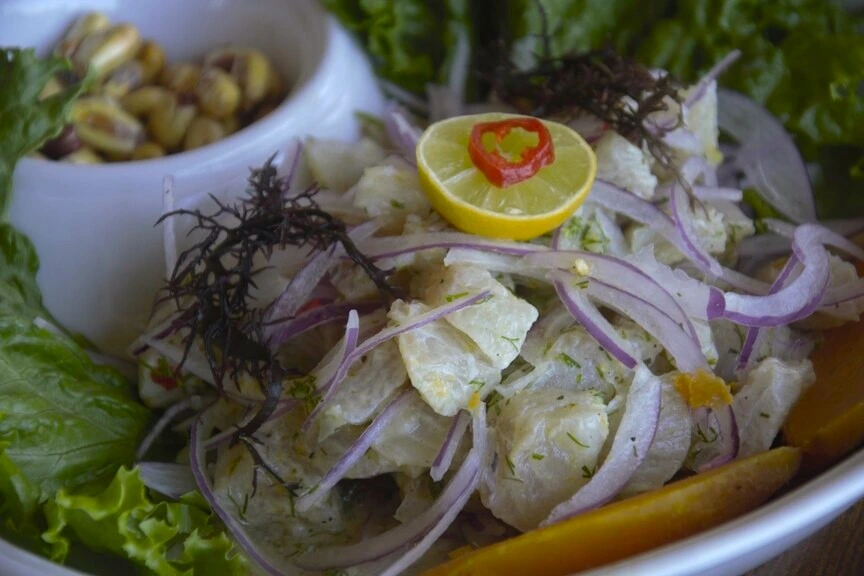
After a generous chilcanazo or a mighty parihuelón, it’s time to dive into the fresh and fiery world of ceviche. Peru’s national dish — with its very own National Ceviche Day, celebrated every 28 June since 2004 — has roots that stretch back to pre-Hispanic times. It is believed that the northern Moche were the first to marinate pieces of fish in the juice of tumbo, a fruit whose flavour is similar to passion fruit.
During the Inca period, chicha de jora was used, but the “romance” — that magical pairing of lime and fish — only blossomed with the arrival of the Spanish. Classic ceviche is beautifully simple. Alongside fresh fish and lime juice, it includes salt, pepper, ají limo and sliced red onion. Sweet potato, toasted cancha, corn and crispy chifle are the loyal and delicious companions of this culinary jewel.
Thanks to the creativity of Peru’s cooks, the national dish has evolved into many tempting variations. You can choose the traditional ceviche; the mixto (with fish and assorted seafood); the carretillero (served with crispy fried giant squid); or the ceviche de conchas negras, especially popular in northern Peru. And if you’re not used to spicy food, don’t worry — there are gentler versions that won’t set your palate alight.
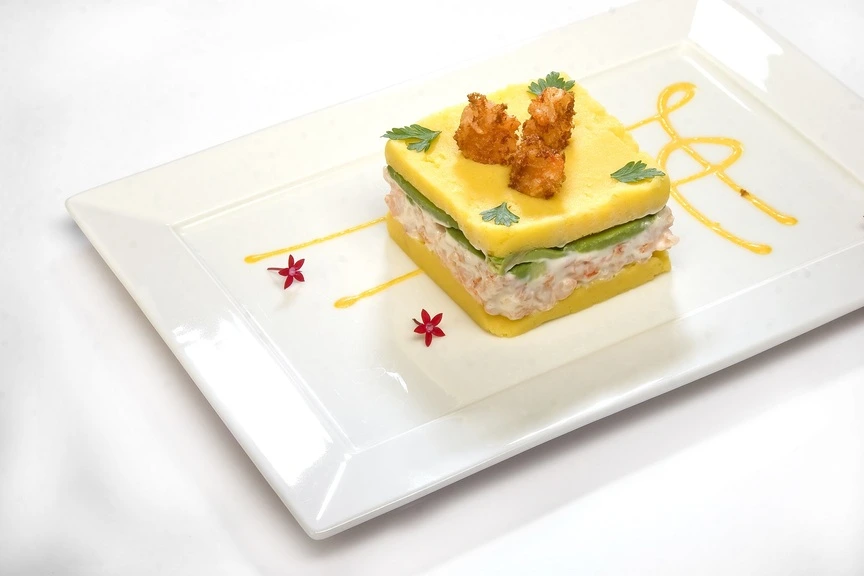
Photo: Morena Cocina screenshot
If you’d like to try another starter, you can’t go wrong with a causa filled with tuna, crab meat or prawns. In this emblematic dish of Lima, boiled potatoes are mashed into a smooth dough and seasoned with salt, lime juice and ají amarillo. A compact layer is shaped as the base, the chosen filling is added, and then it is neatly sealed with another layer of potato on top.
A slice of hard-boiled egg and a generous “drizzle” of mayonnaise — often accompanied by olives and avocado — usually crown this delight. It’s a dish that beautifully brings together the flavours of Peru’s extraordinarily rich sea — one of the most bountiful in the world thanks to its vast marine resources — with those of the Andean potato, domesticated more than 7,000 years ago in the highlands and widely regarded as Peru’s greatest contribution to global cuisine.
Main courses
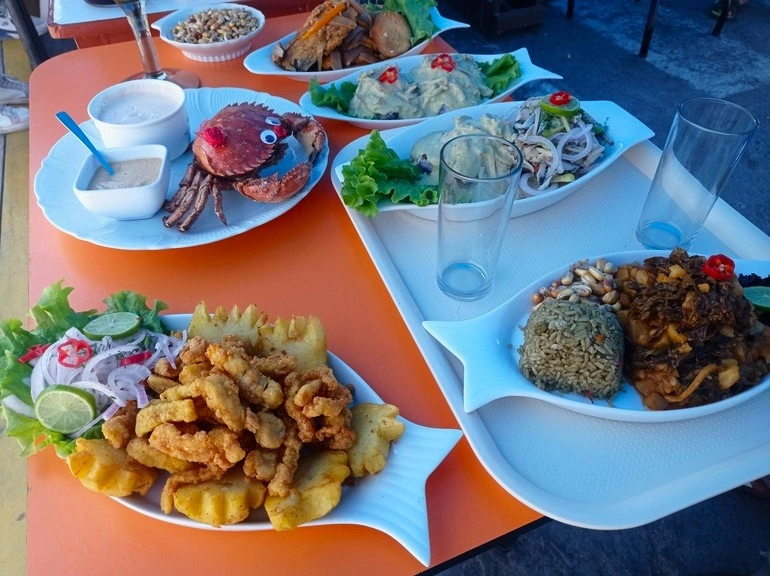
In Lima, committing the deadly sin of gluttony is almost inevitable — so don’t feel guilty if, after your soup and starter, you’re tempted to order a main course as well. In that case, arroz con mariscos, jalea mixta or chicharrón de pescado are hard to resist. There are other options, of course, but these are the favourites — the ones most loved by locals.
The first hardly needs much introduction. Picture a neat mound — or little hill — of fluffy rice, sometimes creamy like a risotto (depending on the chef), generously mixed with assorted seafood, strips of red pepper, diced carrot, sweetcorn kernels and peas, all cooked in a fragrant base of garlic, onion, ají panca and ají amarillo. Fish stock and white wine are added to deepen and enhance the flavour.
Jalea mixta and chicharrón de pescado are quite similar. The key difference lies in the addition of assorted seafood and crispy fried yuyos — a type of Pacific seaweed — in the former, which is also served with tartar sauce. In both dishes, the crunchy pieces of fish (and seafood) are accompanied by sarza criolla (a fresh onion relish), boiled cassava, chilli cream, toasted cancha and crispy chifles. I know — choosing just one isn’t easy, so why not sample a little of each?
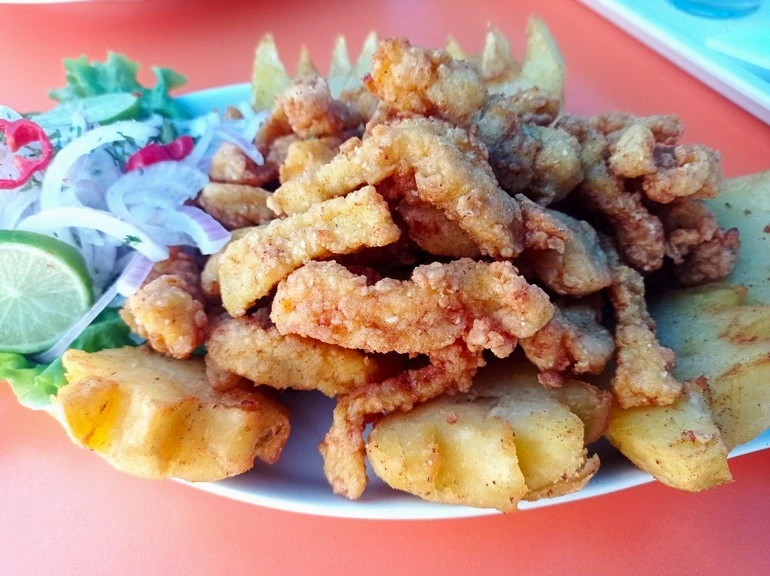
That’s precisely why many cevicherías in Lima offer mixed platters. These generous combinations bring together three or more dishes, so you can sample a bit of everything. The popular rondas typically include ceviche, arroz con mariscos (or seafood chaufa rice) and jalea mixta (or chicharrón de pescado). Other tempting versions may add tiradito, causa rellena or pulpo al olivo to the feast.
And if you’re wondering which drinks best accompany such a banquet, may I suggest a Pisco Sour, a Chilcano, a well-chilled beer or a refreshing leche de tigre. If you’d rather skip the alcohol, chicha morada is always an excellent choice. And if you’re fond of fizzy drinks, nothing beats an Inca Kola — a beverage that is practically a national symbol.
The table is set. All that’s left for me to say is: enjoy your meal!
February 21, 2026