


Peru: Easter Destinations
The sword and the cross —and, of course, the pursuit of wealth as well—shaped the invasion and subsequent conquest of Tawantinsuyo, the vast territory of the Incas. That duality was evident from the very first encounter between the Spaniards, led by Francisco Pizarro, and Atahualpa, the “Son of the Sun”, who shone with pride after his victory in the fratricidal war against his brother Huáscar for control of the empire.
On 16 November 1532, when Atahualpa came to meet the Iberians in what is now the Plaza de Armas of Cajamarca, a city in the northern highlands of Peru, the first to approach him was the Dominican friar Vicente de Valverde. This “man of God” carried a cross and a Bible, demanding that the Sapa Inca abandon his pagan beliefs and accept the authority of the Spanish Crown.
The friar handed him the Bible. Atahualpa threw it aside—perhaps out of disdain, perhaps out of fear. That reaction became the reason, or perhaps the excuse, that triggered the attack by the Europeans and the capture of the so-called idolater. The use of arquebuses and falconets, along with the thunder of galloping horses—animals unknown in these lands—made the task easier against the astonished guards of the Andean ruler. They were left completely paralysed.
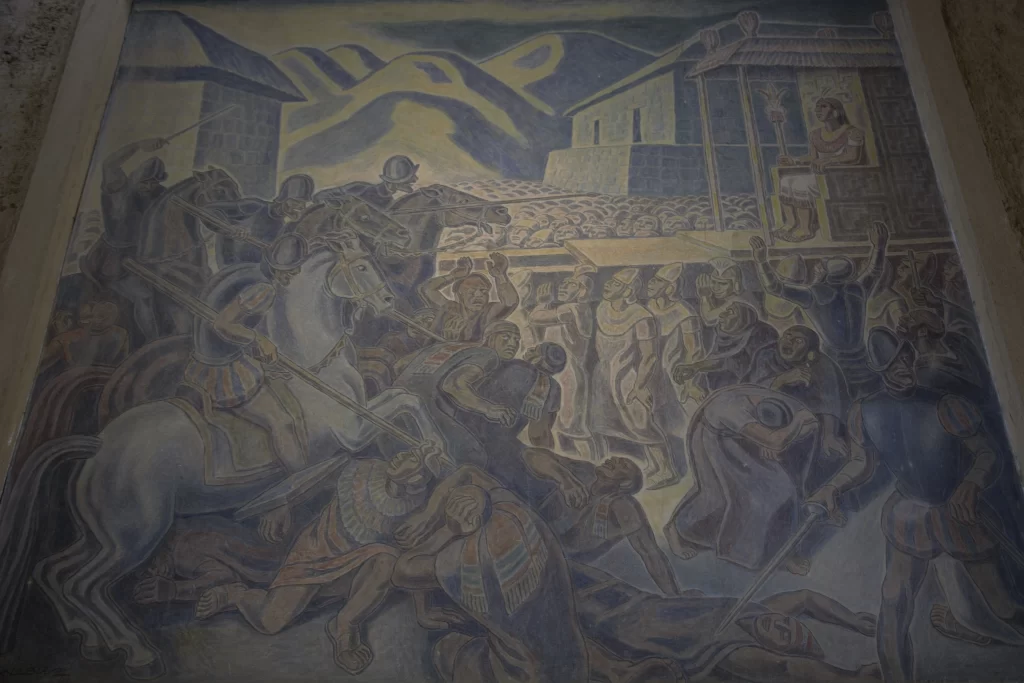
That was the first link in a chain of historical events that would end with the execution of the Inca and the destruction of his empire. The “Son of the Sun” gained nothing from trying to “buy” his freedom with vast amounts of gold and silver. He was deceived. His fate was sealed. On 26 July 1533, he was strangled—accused of idolatry, fratricide and conspiracy—in the very same square where he had been captured.
The sword and the cross shaped the destiny of what is now Peru. The “sword” suppressed, for nearly three centuries, all attempts to return to the old order as well as any efforts to create a new one; while the “cross” imposed itself upon the huacas (temples), where people had once worshipped Inti (the Sun) and Killa (the Moon), Pachamama (Mother Earth) and Illapa (the god of thunder), among other pre-Hispanic deities.
A country of faith
With the cross and the Bible, priests began to spread the Gospel of Christ throughout the Andean world. It was neither an easy task nor an entirely holy one. Be that as it may, those words took root in the hearts of men and women, so much so that Article 50 of the Constitution recognises the Catholic Church as “an important element in the historical, cultural and moral formation of Peru”.
A country that believes and prays, that makes offerings and celebrates the saints and miraculous virgins enshrined on church altars. At times, the fervour of the faithful can be rather excessive, and more than one priest takes the opportunity during Mass to ask them to “ease off a bit on the drinking and dancing”, as wandering about tipsy is hardly pleasing to the Almighty.
That said, it’s well known that quite a few priests enthusiastically join in the dancing and the toasts. Oh dear—I probably shouldn’t have written that. After all, God forgives sin, but not scandal. Nor does He forgive writers who, being a bit absent-minded, fail to explain that these references to the sword, the cross and evangelisation are simply the prelude to a text about the celebrations of Holy Week in Peru.
Yes, celebrations in the plural—because in a predominantly Catholic country, where faith takes on different shades in each region, the remembrance of the life, passion, death and resurrection of Jesus Christ becomes an event that goes far beyond the religious sphere. In these globalised times, Holy Week is also a cultural and tourist occasion which, thanks to its deep significance, captures the attention even of those who do not believe.
Religious tourism during the holy days. With three-hour Masses and sermons, visits to seven churches, and enactments of the Stations of the Cross; with processions of sacred images and carpets of flowers covering the ground in villages or the streets of cities; and even with delicious special dishes and traditional colonial sweets prepared in convents.
A rosary of churches
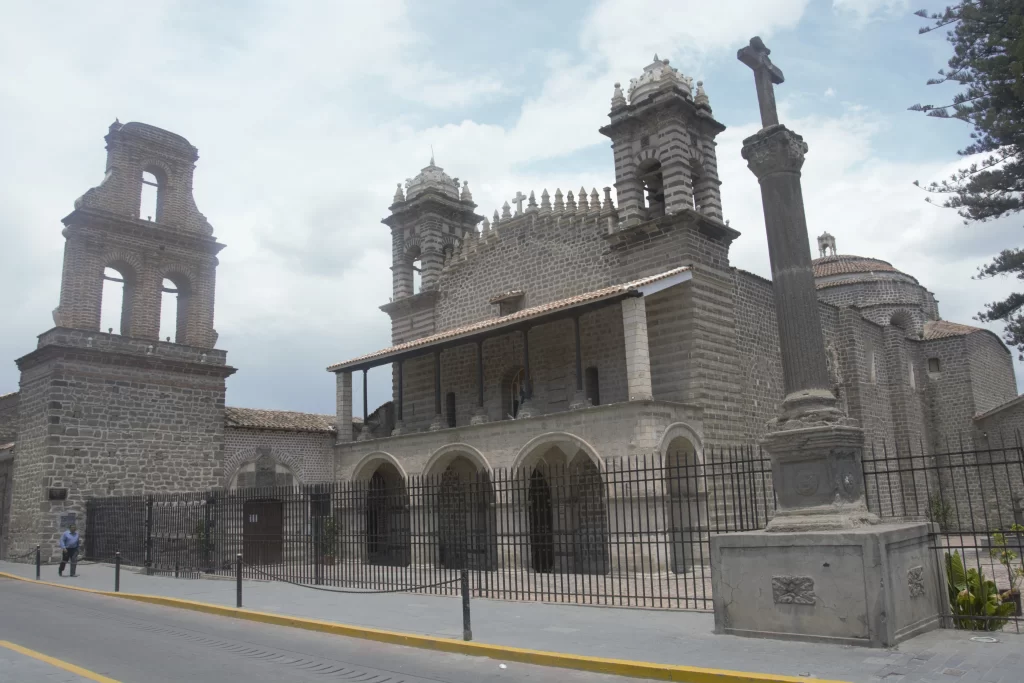
Churches and convents—many colonial churches and convents—fill the historic centres of Lima, Cusco, Arequipa, Ayacucho and Huancavelica, to name just a few cities in Peru. Faith extends into towns and communities as well, where imposing churches in Baroque, Neoclassical or Renaissance styles still stand. Inside, they house valuable works of religious art.
Holy Week is an ideal time to visit these “houses of God”, built by noble families with the rather “selfless” aim of securing their eternal salvation. Tradition has it that on Maundy Thursday, believers visit seven churches, symbolising the key moments in Christ’s journey from the Last Supper to his death on the cross.
This tradition is easy to follow in Lima’s historic centre. With little effort, you can reach the Cathedral, which dates back to 1535; San Francisco, a stronghold of colonial art; Las Nazarenas, the “home” of the Lord of Miracles; San Pedro, with its Baroque façade; La Merced, where Saint Martin de Porres was baptised; Santo Domingo, which holds the relics of three saints; and Santa Rosa, built on the site of the Lima saint’s former home.
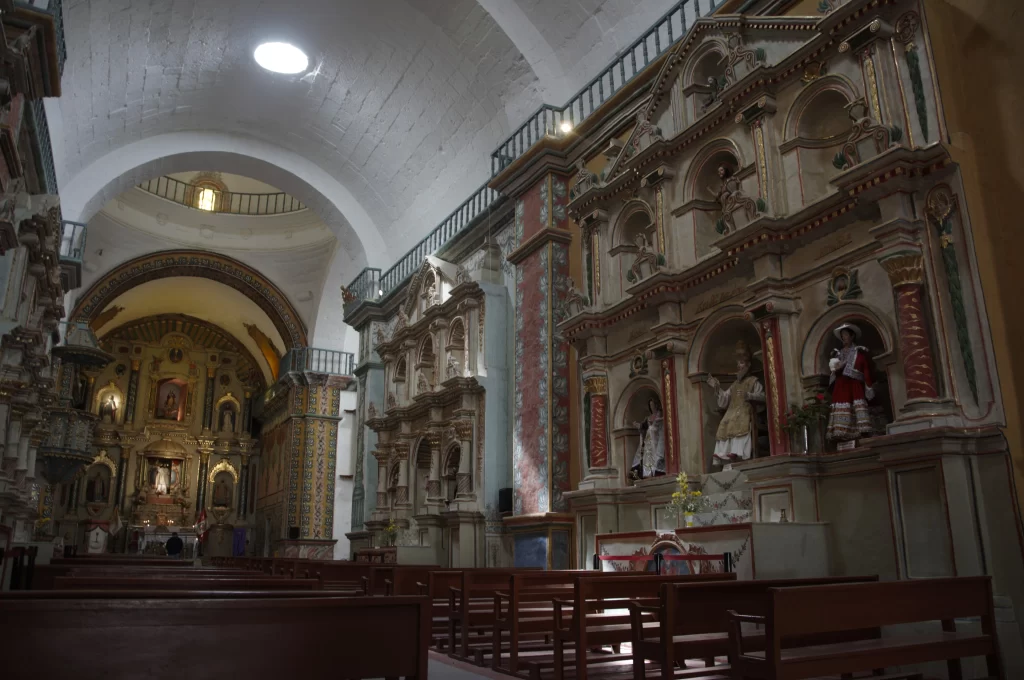
The same can be seen in Cusco, with its churches built upon Inca palaces and temples; in Arequipa, where sillar—a volcanic stone—is widely used; and in Ayacucho, known as the “City of the 37 colonial churches”. Located 560 km southeast of Lima, this city—whose name can be interpreted as the “dwelling of the soul”—becomes the most visited destination for both Peruvians and international travellers during Holy Week.
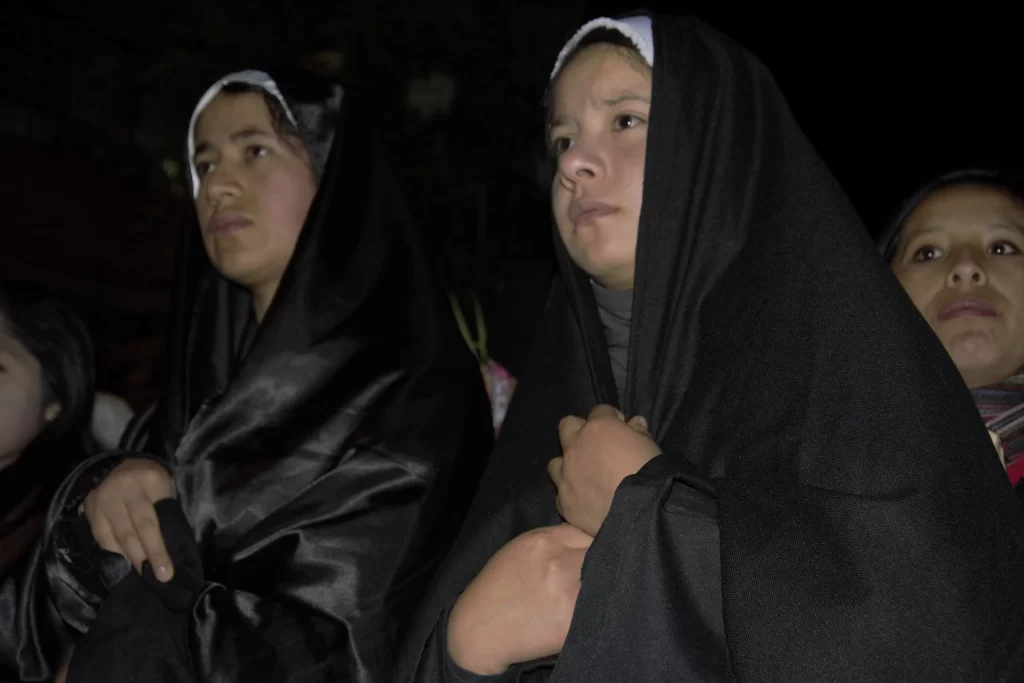
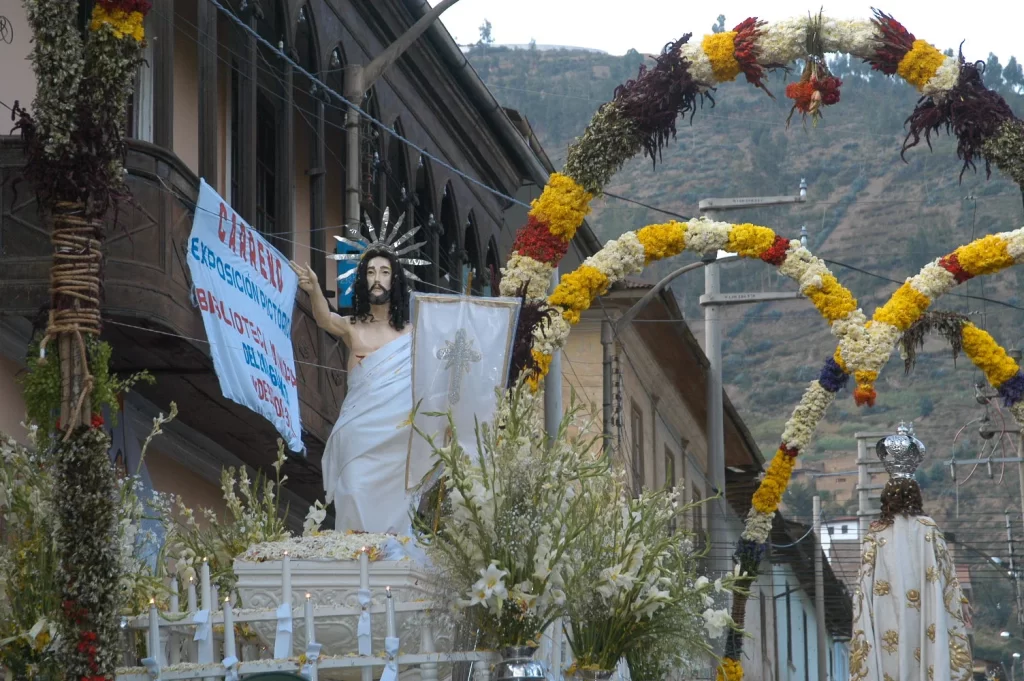
The vast processions, filled with devoted worshippers dressed in mourning and moved to tears; the grand platforms carrying the Risen Christ, illuminated by thousands of candles (around 5,000) that light up the dawn on Sunday; the presence of Andean symbols within the religious ceremonies; and even the traditional sweets prepared in the convents of Santa Teresa and Santa Clara—all combine to make this one of the most spectacular celebrations in the Catholic world.
Holy Week Getaways
Ayacucho’s celebration is not the only memorable Holy Week. Just as the churches and processions are not the only attractions in this city, where visiting the Wari Archaeological Complex, the capital of the first Andean empire, is almost a must. So, in between prayers and moments of devotion, you’ll have a wonderful time in the region where the final battle for the independence of the Americas was fought.
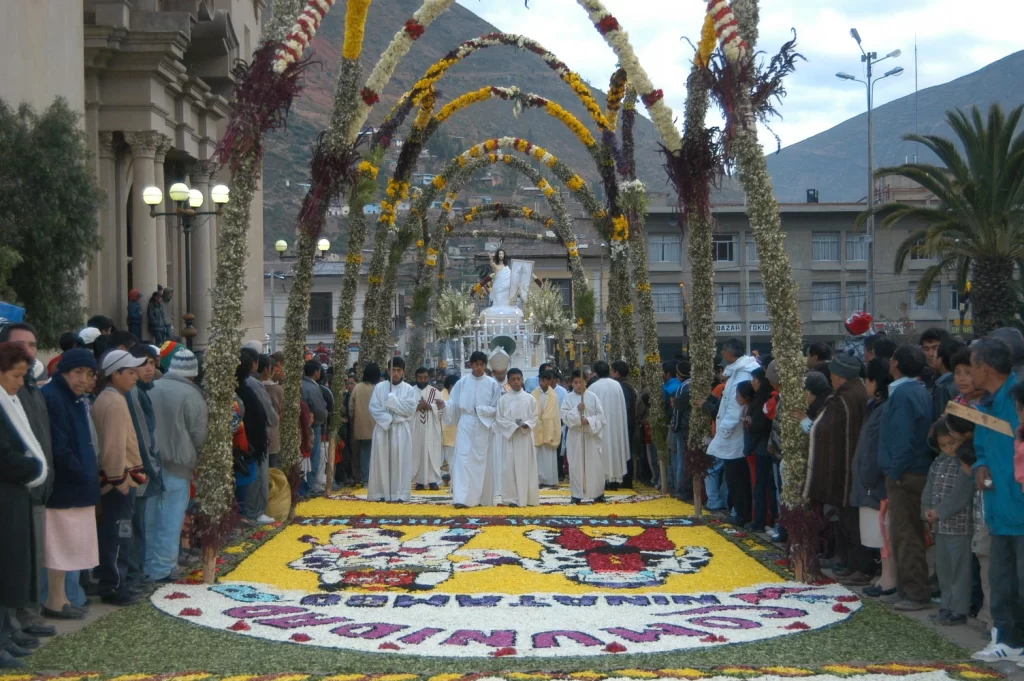
Will you stay in Lima or travel to Ayacucho (2,760 m above sea level / 10 hours by coach / 1 hour by plane)? Perhaps you’d prefer other options. And yes, there certainly are. One of them is Tarma, in the Junín region. Known as the “Pearl of the Andes” (3,050 m above sea level), it becomes especially charming during Holy Week, when devoted locals from both the countryside and the town gather in the Plaza de Armas and its surroundings to carry out a very special mission.
They create colourful and artistic carpets using the petals of flowers grown in the nearby fields. There are so many, and they are so beautiful, that simply looking at them lifts the spirit. The designs, whose edges are highlighted with coffee beans, are not exclusively religious. You’ll also find scenes of rural life and patterns that recall the pre-Hispanic past of this city in central Peru (7 hours by coach from Lima).
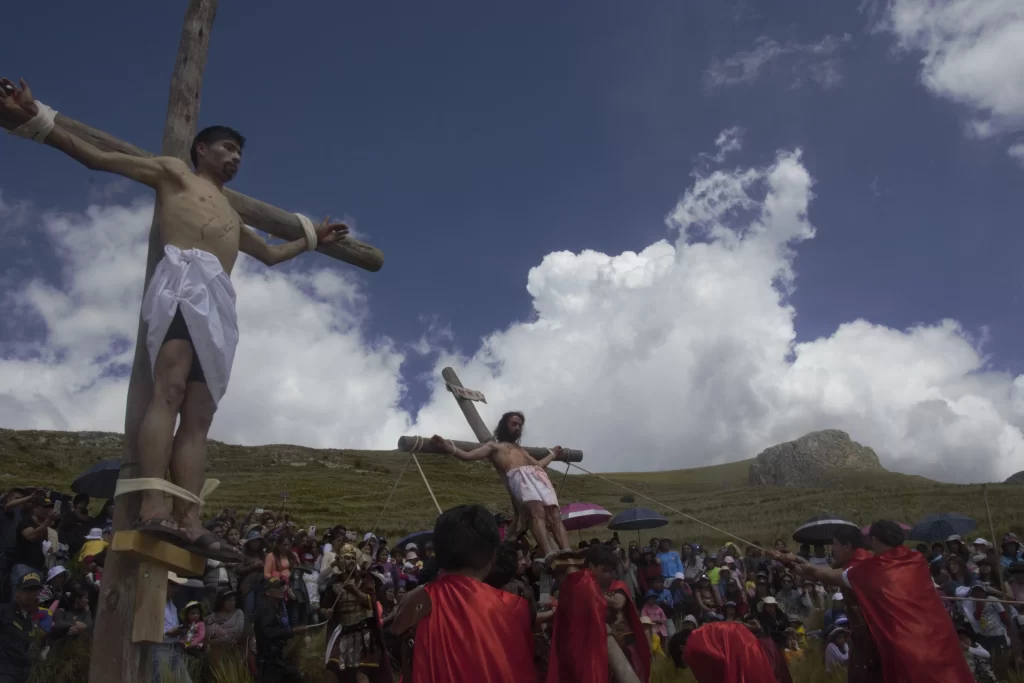
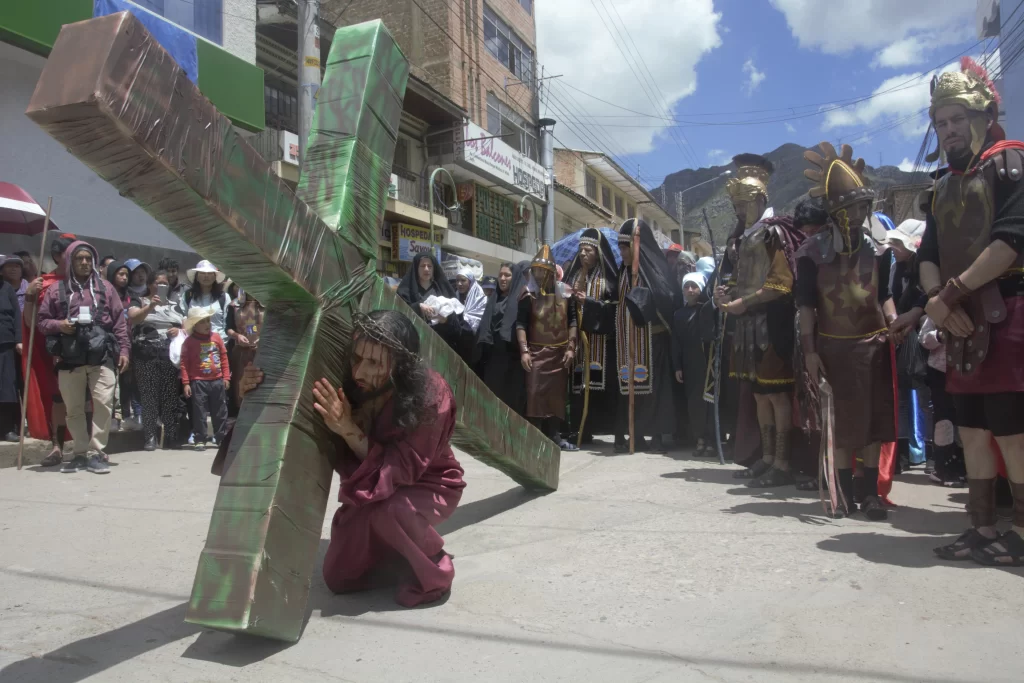
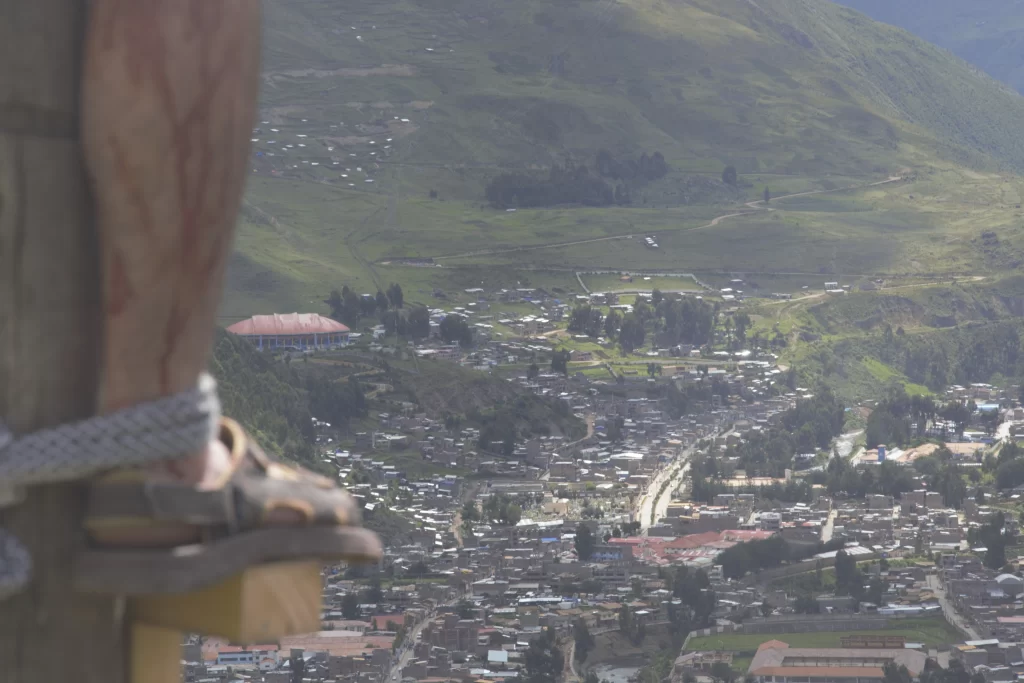
If you’re looking for something more intense and vivid, take part in the Stations of the Cross held on Good Friday in Huancavelica, the capital of the region of the same name. The re-enactment begins in the atrium of the Cathedral in the Plaza de Armas. From there, the performers who portray the Passion of Christ—more than 50 in total—walk 2.8 km to the summit of Oropesa Hill, which rises above 4,000 metres in altitude.
“It’s the highest Stations of the Cross in the world,” proudly say the locals of a city that, during colonial times, was known as the “Villa Rica de Oropesa” thanks to the fortunes generated by mercury from the Santa Bárbara mine. Would you dare to travel more than 10 hours by coach from Lima and then hike all the way to the summit? I’ve been there, and believe me, it’s well worth the effort—you’ll witness a remarkable Holy Week tradition and, along the way, perhaps even atone for a few sins.
March 24, 2026