


Lima: an adventure on rails along the Central Railway
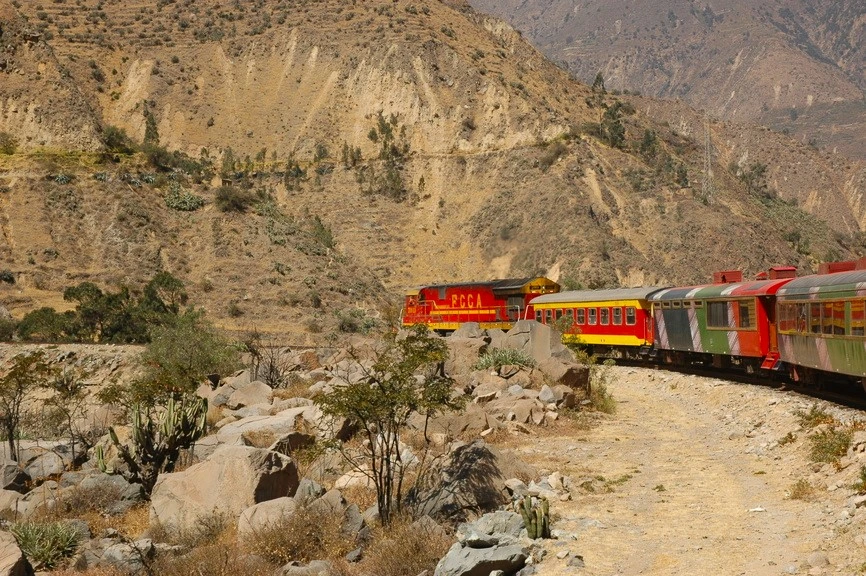
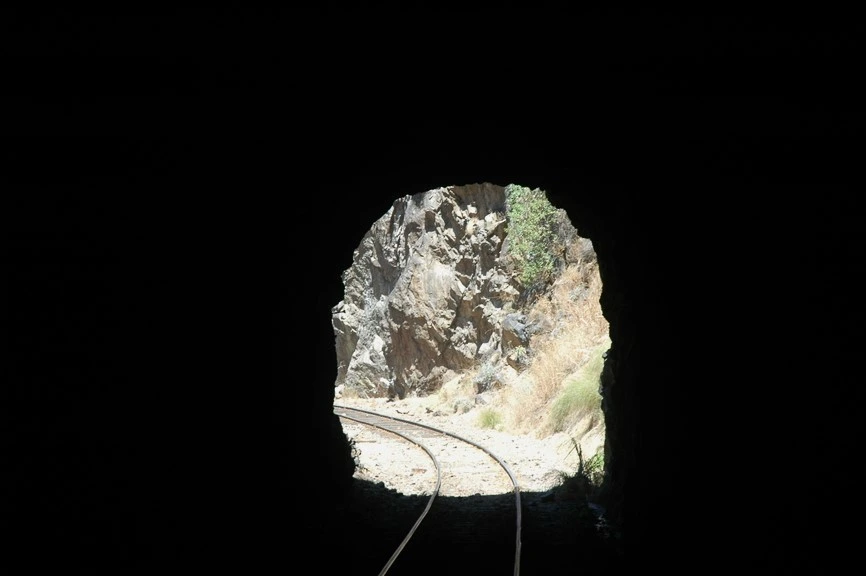
Train journeys have an aura of romance and adventure. You might think differently, but whenever I plan a trip on rails, my mind drifts to certain images borrowed from films and stories; I picture myself starting a promising conversation with a lovely young lady — so promising that I secretly hope for the cover of a dark tunnel to trade words for a kiss.
I must confess, it’s never actually happened to me. Maybe next time — or maybe it never will. Ah well, that doesn’t matter. I still can’t help but imagine scenes where I turn into a hero who, armed with a gun or with bare fists, takes down the bandits trying to rob the train in some desolate landscape. Yes, I know, not very original — it’s been done a thousand times in cowboy films.
I also picture myself in deserted towns or remote areas, a kind of pioneer. But enough — I don’t want to bore you with my travelling fantasies. That’s not really the point of this story. I admit it and apologise for going slightly “off the rails”, as people used to say about the capricious Tren Macho, the legendary Huancayo–Huancavelica railway that “leaves when it wants and arrives when it can.”
That’s how uncertain and challenging that journey through Peru’s Central Highlands used to be — a country that boasts railway lines leading to places of great tourist interest. The best-known section is the one connecting Ollantaytambo with Machu Picchu Pueblo. In its early days, this line linked Cusco, the ancient Inca capital, with Quillabamba, the capital of the Amazonian province of La Convención.
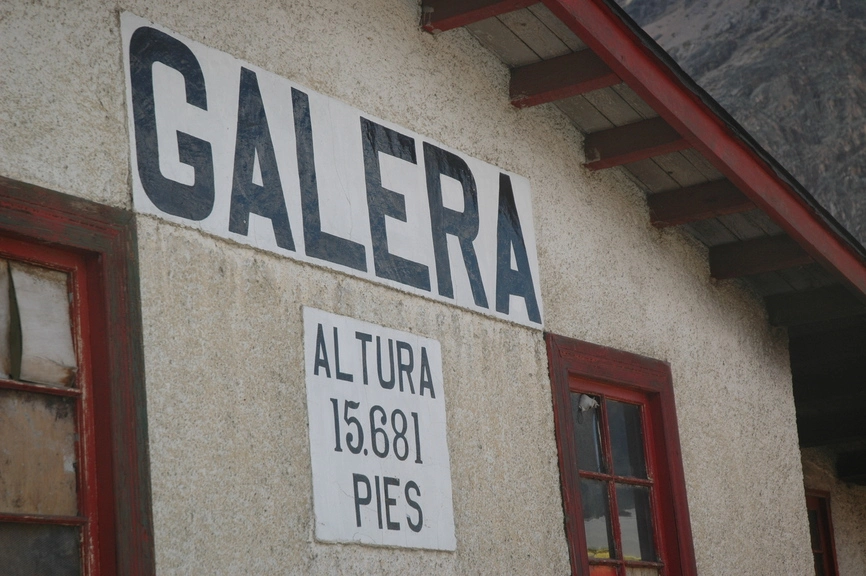
Today, there are several tourist rail options that let you reach the cities of Cusco, Puno, and Arequipa in a different way — on one- or two-night journeys filled with luxury and comfort. But there’s another route, more occasional and lesser-known, that begins on the coast and ends high in the Andes. On its determined climb towards the mountains, the railway reaches an altitude of 4,781 metres above sea level.
The first train in South America
The whistles of locomotives were first heard in Peru on 17 May 1851, with the inauguration of South America’s very first railway. The line, roughly 15 kilometres long, connected Lima with the port of Callao. An English-built engine manufactured by Robert Stephenson & Co. led those pioneering journeys, made possible through the initiative of President Ramón Castilla y Marquesado.
Marshal Castilla governed Peru in two periods (1845–1851 / 1855–1862). During his rule, slavery and the indigenous tribute were abolished. He also launched a process of modernisation which, in addition to the Lima–Callao and Tacna–Arica railways (1856), brought the telegraph and gas lighting to the capital of the Republic. These advances marked a milestone in Peruvian history.
You might be wondering why I’m writing about Castilla’s government instead of the Lima–Huancayo–Lima tourist train. Patience. I haven’t gone “off the rails” or boarded the wrong carriage. I’m not even arriving at a station — I just wanted to mention the origins of the Central Railway of Peru (Ferrocarril Central del Perú), known today as the Ferrocarril Central Andino.
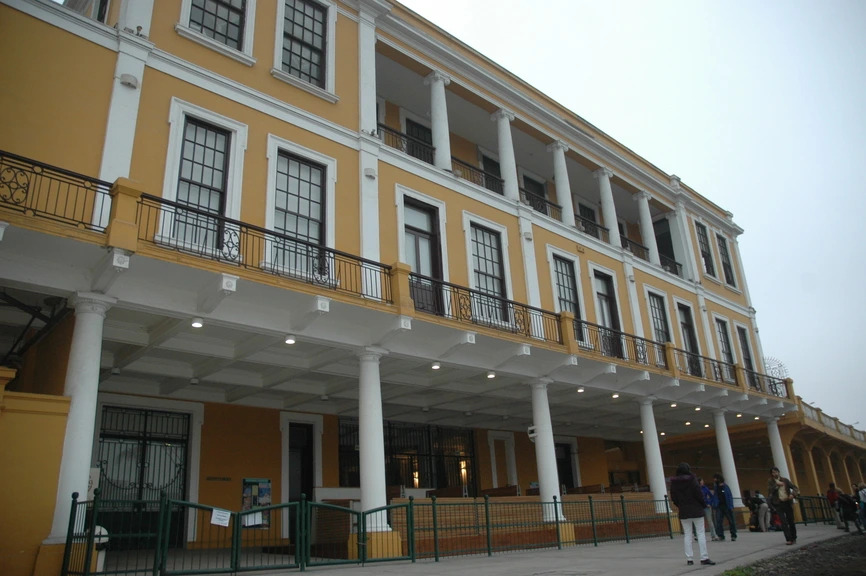
By train from Lima to Huancayo (3,259 metres above sea level) — but only on special occasions such as Easter or Peru’s Independence Day celebrations. When that happens, the old and elegant Desamparados Station, now home to the House of Peruvian Literature, once again fills with dozens of passengers making their way towards the carriages about to depart for the highlands.
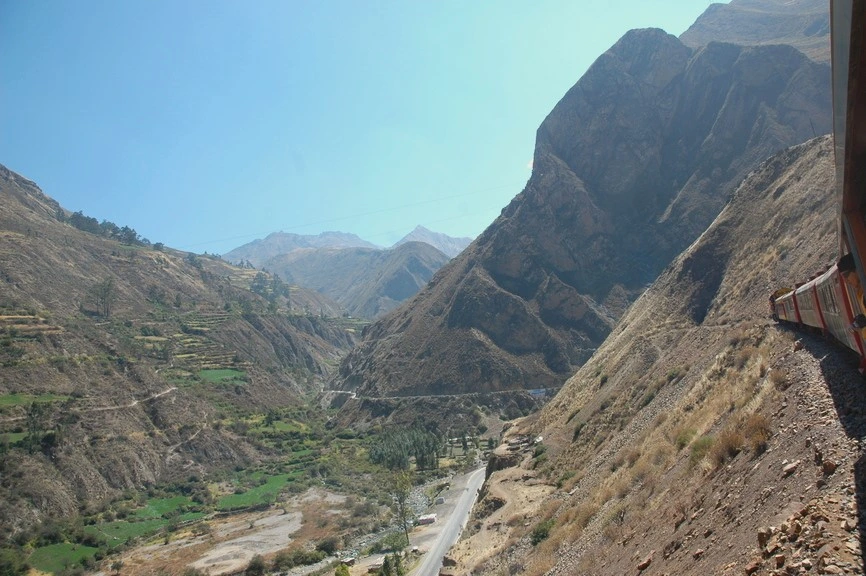
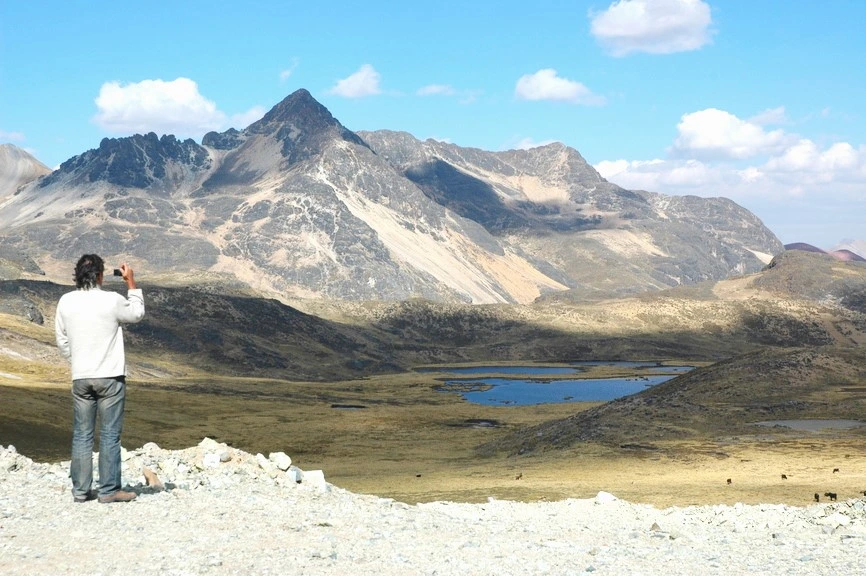
Let the adventure begin! Twelve hours through valleys and tunnels, mountains and bridges, mining towns and thrilling zigzags. Little by little, the train leaves the coast behind and climbs steadily towards the Andes. The air becomes thinner. You catch glimpses of the Rímac River and snow-capped peaks. You feel the chill, yet the excitement of being there — watching the changing landscape and the winding railway line laid more than 150 years ago — ignites your travelling spirit.
A railway dream
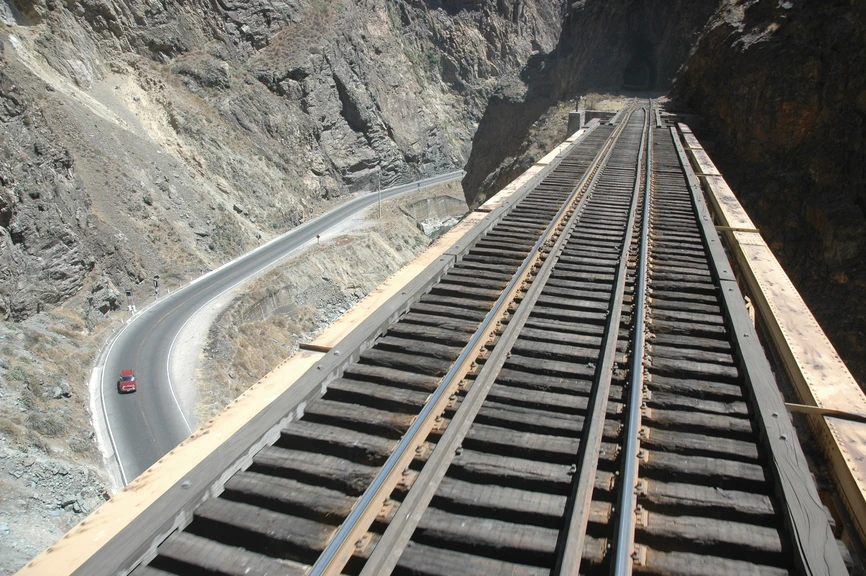
A challenge for railway engineering. A technological feat carved into the ravines of the Andes. The idea was born in 1851, when Polish engineer Ernesto Malinowski proposed extending the Lima–Callao railway to Jauja, a charming city in the Mantaro Valley (Junín region). Founded by Francisco Pizarro on 25 April 1534, Jauja had the honour of being Peru’s first capital.
“Of the four possible routes, the one through the Rímac River gorge was chosen. The layout of the initial section was designed by engineer Malinowski, and its construction was entrusted to the American Henry Meiggs, who was expected to complete the work within six years,” notes the website of Ferrocarril Central Andino (FCA), the company that currently operates “the highest railway in the Americas and the second highest in the world.”
Stop. Look. Listen. Let’s pause to get the timeline straight and avoid confusion. Although the idea was conceived in 1851, construction of the railway actually began on 20 January 1870, under the direction of Enrique (Henry) Meiggs — a skilled and shrewd American entrepreneur who, among the businessmen of his time, was known as “the most generous man in Peru.”
“The politicians who benefited from his bribes thought the same,” writes Ricardo Hinojosa in his article Rails in the Andes: When Altitude Is the Heart of the Earth. As if his “generosity” and experience in railway construction weren’t enough, Meiggs’s proposal also happened to be the most economical. Done. Contract signed. The American now had to “lay rails where llamas tread.”
That was his promise, according to Hinojosa’s account — a promise that was far from easy to keep, given the steep terrain and the outbreaks of Peruvian wart disease and Oroya fever. These devastating illnesses took a severe toll on the workers. Both ailments, documented since pre-Hispanic times, claimed the lives of nearly 7,000 people, as mentioned on the FCA website.
On the way to the “Unconquerable City”
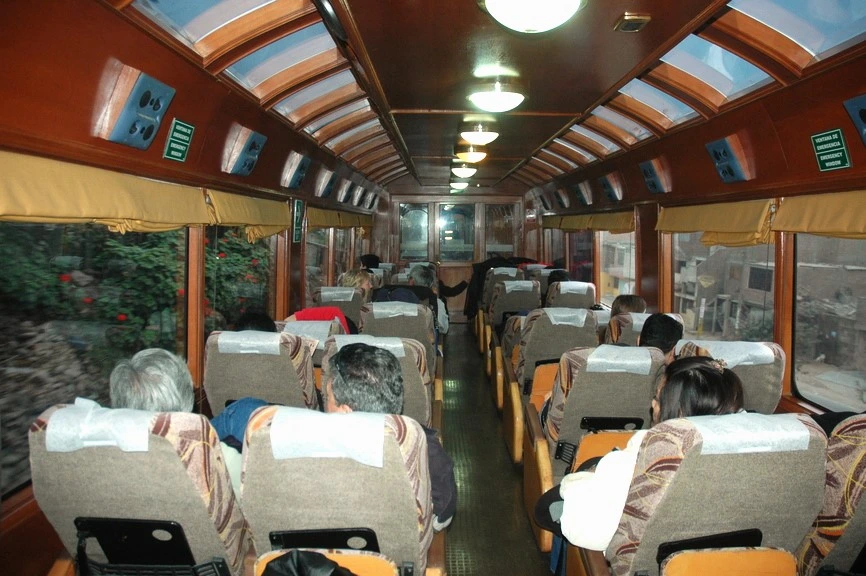
The train comes to life and slowly pulls away from Lima’s Historic Centre. The locomotive moves at an unhurried pace, as if wanting the passengers in the observation carriage to take in the scenery and admire the technical feat achieved by more than 10,000 men — Peruvians, Chileans, and Chinese workers from Macao — who “planted” rails and sleepers along the 535 kilometres of the Central Railway.
A titanic work built with perseverance and without the help of the modern machinery we know today. It was no easy task — geography, economics, politics, and even war stood in the way. In 1878, construction was halted by the war with Chile. Defeat, crisis, and the struggle to rebuild a wounded nation delayed the project’s continuation until 1890. Three years later, the rails would finally reach La Oroya.
The metropolis fades into the distance. The river, the gorges, and the mountains emerge. The sky clears, and the air feels purer. The train heads towards Huancayo, just as it did on 22 September 1908. The first journey. Desamparados Station. 150 passengers board the carriages, pulled by a powerful Rogers locomotive. It’s a historic moment — the culmination of a story that began in 1851.
Two days later, on 24 September, the locomotive “arrived in Huancayo, billowing smoke and blowing its whistles… greeted with a triumphant welcome,” as stated in the document Enrique Meiggs 1811–1877, published by the Congress of the Republic. Don’t worry — your journey will be shorter. Still, I’m sure you’ll arrive just as thrilled as those pioneers of the early 20th century.
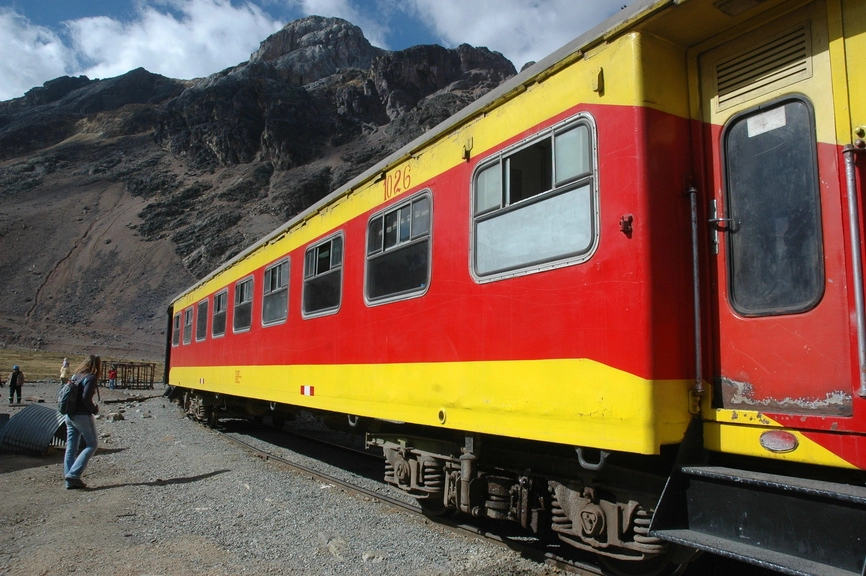
And how could you not be? On the way to the “Unconquerable City” — as Huancayo, the capital of Junín, is known — the train passes through 69 tunnels (the longest being the Balta Tunnel, stretching 1,378 metres), crosses 58 bridges (including the spectacular Infiernillo, which seems to “fly” between two mountains), and climbs six thrilling zigzags. The route includes a stop at Galera Station, the highest point of the line, where you’ll catch sight of the snow-capped Ticlio peak (4,818 m).
So now you know — if you’re one of those who believe trains carry an aura of romance and adventure, hop aboard the Central Railway of Peru. And if you don’t, but still love travel and mountain scenery, join this unique journey — so special that it only takes place on festive days and holidays.
October 22, 2025