


Lima: Get closer to the snow in the Cordillera La Viuda
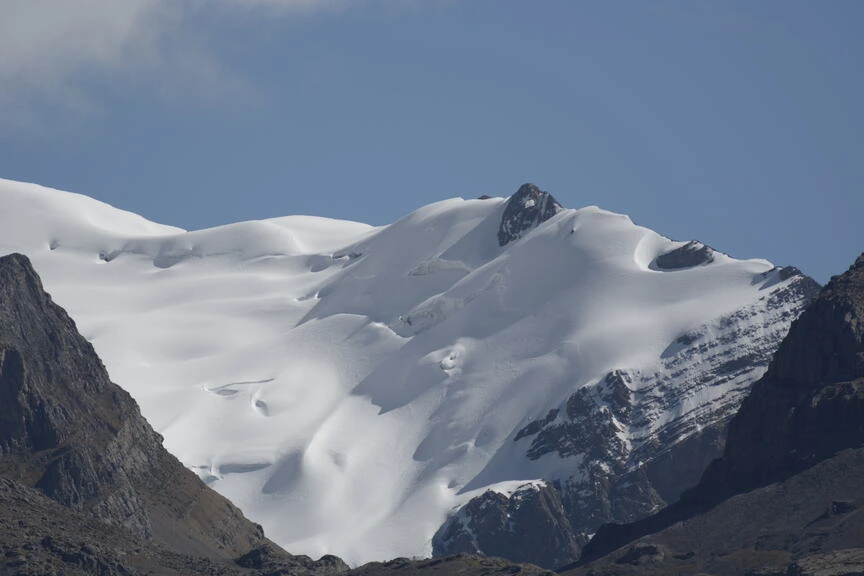
Before becoming a mountain, she was a goddess, a wife and a mother. But there are no perfect lives—least of all in a land of myths and legends, where even divinity offers no escape from conflict, tragedy or sorrow. Quite the opposite. Here, the struggles between supreme beings were, and still are, so fierce and relentless that collective memory refuses to forget them, preserving them for eternity.
Such is the story of Pachamama—the goddess, wife and mother who became a widow after Pachacamac drowned in the sea of Lurín. It was then that Wakon, a malevolent god, approached her with amorous intentions. He failed. Rejected and humiliated, wounded in pride and blinded by rage, he murdered the woman he claimed to love.
After taking her life, Wakon began devouring the body of the widow in a brutal act of savagery. As he did, the twin sons of the goddess arrived to avenge her. They fought the assassin and defeated him, but they could not capture him. He fled—cowardly fleeing towards the highlands of Lima, where he cast the remains of Pachamama upon the summit of a mountain.
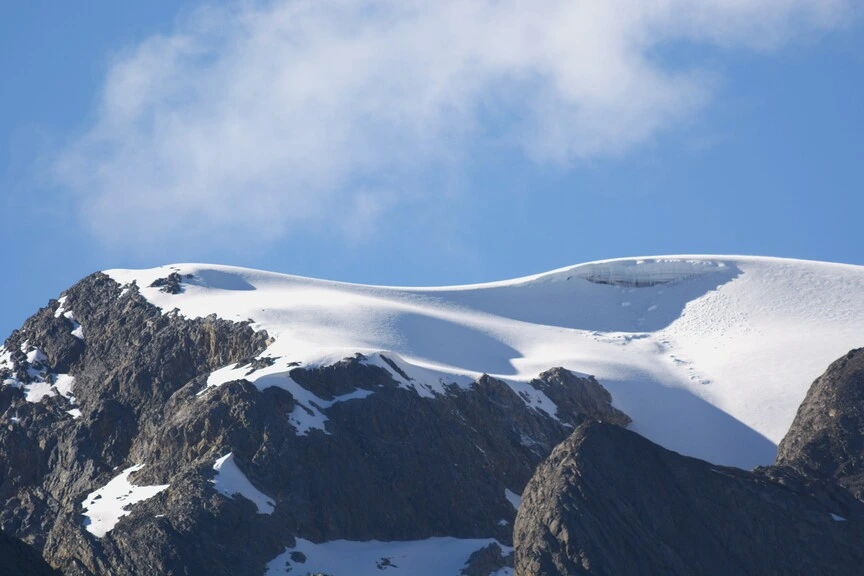
A mountain in the district of Huaro, in the province of Canta (Lima Region); a mountain you can reach on a full-day trip from the Peruvian capital; a mountain called La Viuda—the main snow-capped peak of the range that bears its name—so called because its summit resembles the mourning veil worn by women after the death of their husbands.
Leaving the metropolis behind means chasing snow and myths, nature and silence, lakes and mountains, in a branch of the Central Andes of Peru that stretches across Lima, Junín and Pasco. Heading to higher ground invites you to walk among ichu (the highland grass of the puna) and breathe in crisp, refrigerator-cold air—courtesy of the more than 4,000 metres above sea level that make this destination both fascinating and demanding.
The Road to La Viuda
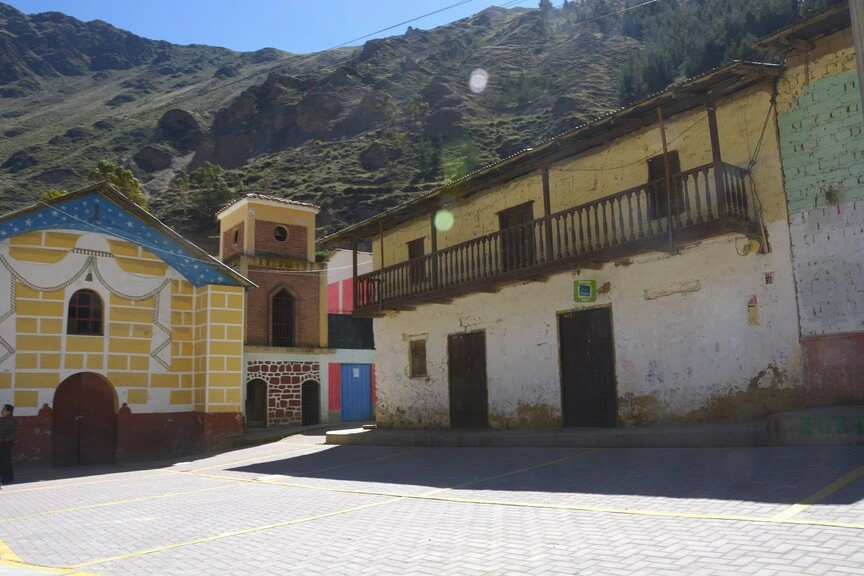
Going beyond the Historic Centre, Miraflores and Barranco is a fantastic option if you’re in Lima. When planning your trip to Peru, make sure to set aside a couple of days to explore the natural destinations close to the “City of Kings”. There are so many that, if we tried to list them all now, we’d run out of space to tell you about Canta and La Viuda.
Well, since we’ve piqued your curiosity, here are two adventurous hints to tempt you: the plateau and stone forest of Markahuasi, a place so intriguing that some say even “extraterrestrials have visited“; and the Nor Yauyos Cochas Landscape Reserve, a protected area filled with history-steeped villages, stunning waterfalls and pre-Hispanic trails leading to the sacred apu Pariacaca.
Now then, let’s head to La Viuda… but how do you get there? The simplest and most comfortable way is to join one of the full-day tours offered by local operators. These usually run on weekends (approximate cost: 90 soles) and include several stops at places of tourist interest, such as the towns of Santa Rosa de Quives, Huaros and Canta.
If you’re the kind of traveller who prefers going independently, the best option is to plan a 2-day / 1-night trip. On the first day, you could visit the Checta petroglyphs and the town of Santa Rosa de Quives. From there, continue on to Canta (105 km from Lima) where you’ll spend the night. The following morning, set off early towards La Viuda (about two hours uphill by road).
Getting from Lima to Canta is fairly straightforward. At kilometre 22 of Avenida Túpac Amaru (in the Carabayllo district) you’ll find vans and shared taxis heading to Canta (cost: around 20 soles). A practical way to reach this point is to take the Metropolitano buses to either Naranjal or Los Incas stations and, from there, catch a taxi or feeder bus to km 22 (ask for details at the stations).
The Highlights of the Route
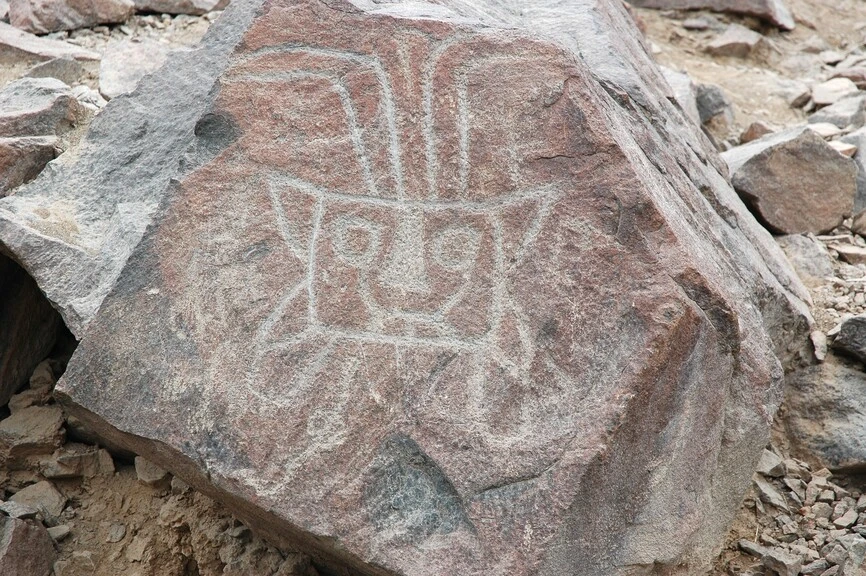
Several stops are needed on the way to La Viuda to make the journey more complete and interesting. After all, this route is not only about mountains, snow and lagoons. Along the way you’ll also find the petroglyphs of Checta (1,200 m a.s.l.), an archaeological site where ancient peoples carved anthropomorphic, zoomorphic and geometric figures into rocks between 1800 and 200 BC.
Ancient traces lie just beside the road (at kilometre 60 of the Lima–Canta highway). Step down, look closely and discover the feline shapes, birds, snakes, spiders, geometric labyrinths and human figures that were first recorded in 1925 by Monsignor Pedro Villar Córdova. Here, more than 450 petroglyphs have been identified, attributed to the Lima culture.
But Checta is only the beginning. Back on the road, your journey continues. Just a few minutes are enough to leap through time — from the pre-Inca world to the colonial era. From the petroglyphs with their possible religious significance, you’ll move on to the house where Isabel Flores de Oliva (1586–1617), better known as Saint Rose of Lima, spent her childhood and teenage years. She became the first saint of Peru and of the Americas. Today this place remains a site of pilgrimage, miracles and faith.
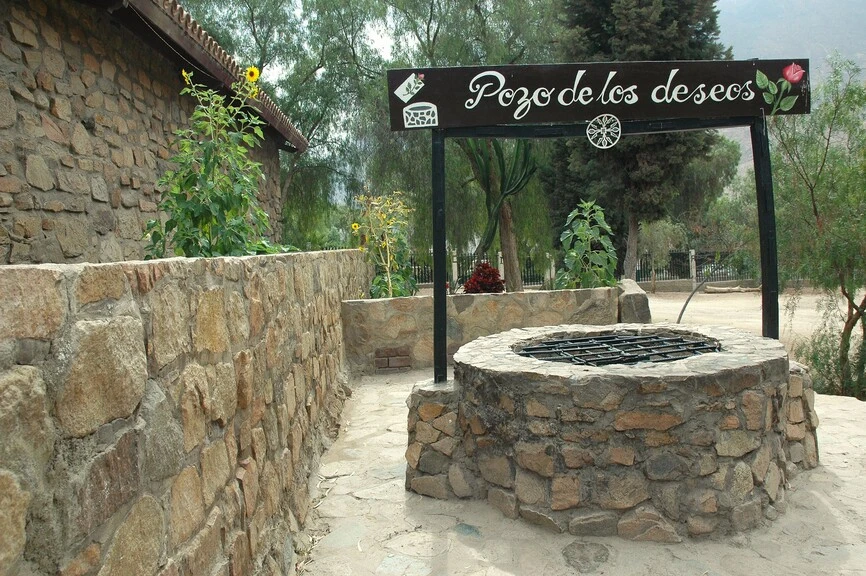
At the Sanctuary of Quives you’ll not only see the simple colonial house where Saint Rose of Lima lived, the small museum displaying some of her belongings, the temple where she was confirmed in 1597, and the chapel where she prayed with deep devotion. You’ll also take part in a tradition: writing a letter to ask for a miracle or make a wish.
Once you’ve finished, you’ll drop it into the Wishing Well. Thousands of testimonies claim that the saint is kind-hearted and listens to her faithful. That hasn’t been my case. My requests have never come true, although I don’t blame the patron saint of the Americas, the Indies and the Philippines. I suspect I know the reasons why my letters were ignored — but I won’t tell you, because this is a traveller’s tale.
The lagoons of La Viuda
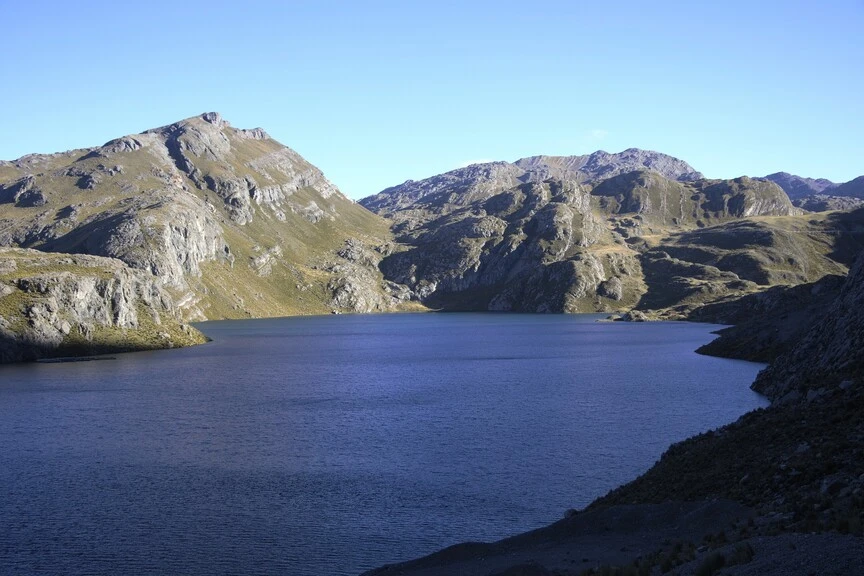
What I will tell you is that in Canta (just 40 km from Quives) you can – or rather should – visit Obrajillo, an ideal spot for camping, and the pre-Inca citadel of Cantamarca, once the residence of the local chief of the Canta people. Further along the route to La Viuda, you’ll be struck by the breathtaking beauty of the Seven Colours Lagoon (4800 m a.s.l.), named for the way its waters shift in tone depending on the position of the sun.
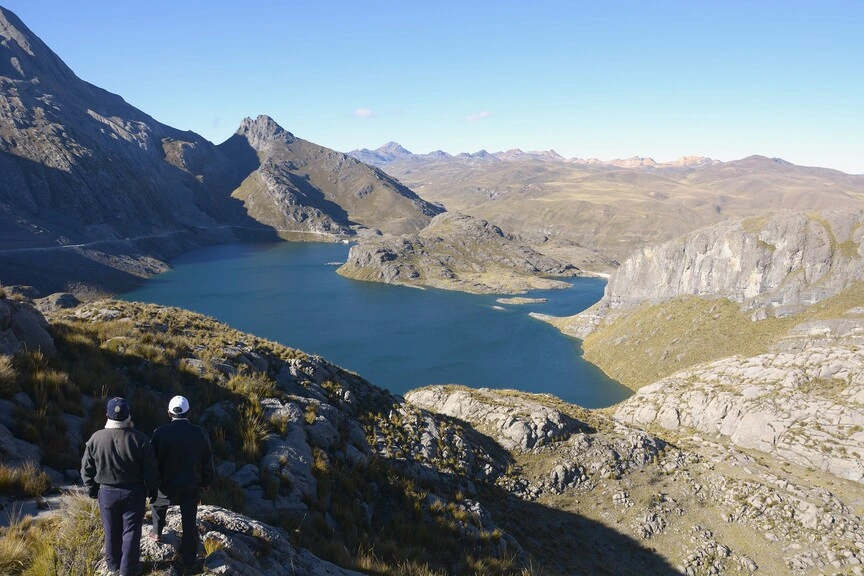
You’ll find equally stunning sights at Chuchún (4424 m a.s.l.), a lagoon formed from the melting glaciers of the cordillera. Its waters shimmer in shades between sky blue and emerald, framed by the winding shapes of the Andean landscape. Locals from Canta claim the lagoon is shaped like the map of Peru. Take a look from different angles and decide for yourself whether they’re right, or whether it’s simply a touch of imagination and pride.
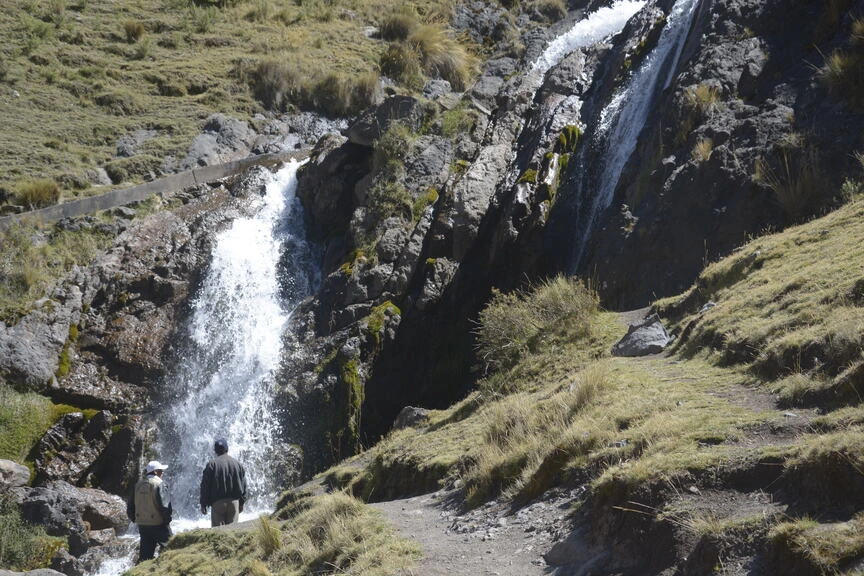
I won’t reveal my own verdict, so as not to influence you. Instead, let me tell you about the Pomora or La Mellicera waterfall. Its crystalline veil—unlike the mourning veil of the mythological La Viuda—slides gracefully down a gorge draped in greenery. A word of warning: if, during your visit, a local invites you to drink from its waters, think twice. Tradition says that whoever does so will become the parent of twins.
Yes, twins, just like the children of Pachamama, the goddess slain by Wakon. Coincidence, or perhaps a legacy of the battles fought between pre-Hispanic deities? This time I choose to believe, because the mountain range is so beautiful and awe-inspiring — despite the scars left by global warming — that it could only have been shaped by one or more higher beings.
And so, in what I can only describe as a mystical state, I walked along the slopes of La Viuda. This chain of scattered snow-capped peaks stretches across an area of 130 kilometres. Now you know: if you want to get close to the snow, head for the heights of the province of Canta, where you’ll see for yourself that in Lima, and indeed in Peru, there is always a nearby and marvellous place waiting to be discovered and explored.
September 27, 2025