


Lima: The vicuñas of Cajatambo
If there were an official list of activities or experiences that every traveller must try in Peru, the number one spot would, without a doubt, go to a visit to Machu Picchu. After all, the Inca citadel is one of those places you simply have to see at least once in your lifetime — and if you get the chance to go more than once, even better! As people like to say these days, with a touch of drama.
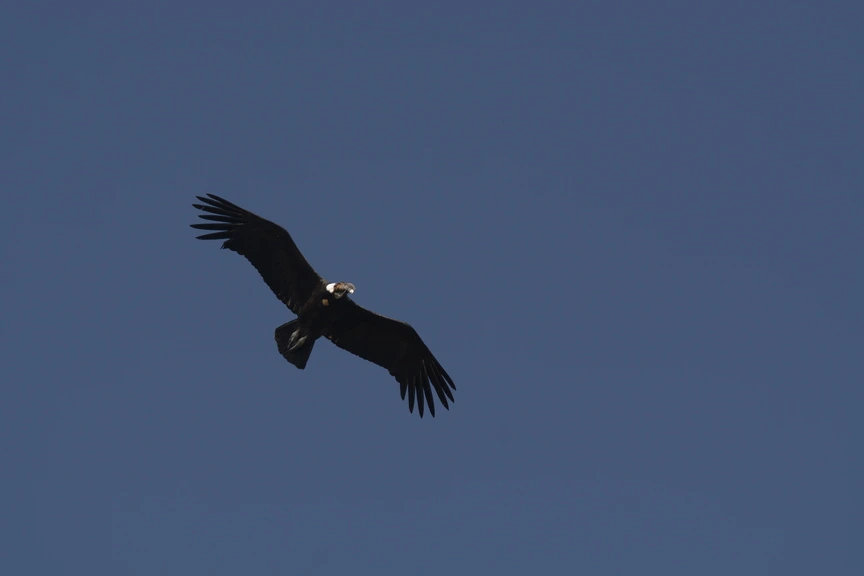
On this imaginary list that I’m cheerfully trying to put together, I’d include a good day of hiking along a stretch of the Qhapaq Ñan (the Great Inca Road), climbing to a mountain viewpoint to watch the majestic flight of the condor, and respectfully taking part in an Andean ritual with coca leaves and a little sip to toast the earth and the mountains.
And since we Peruvians absolutely love it when visitors try our food, it’s essential that you order a spicy cevichito, taste one or several types of chicha (purple corn, de jora, or de molle), and celebrate your holiday with a glass of pisco, our national drink. But that’s not all. If you’re up for a challenge, have breakfast or lunch at a local market and dare to try — from the paws to the head — a delicious fried guinea pig (cuy).
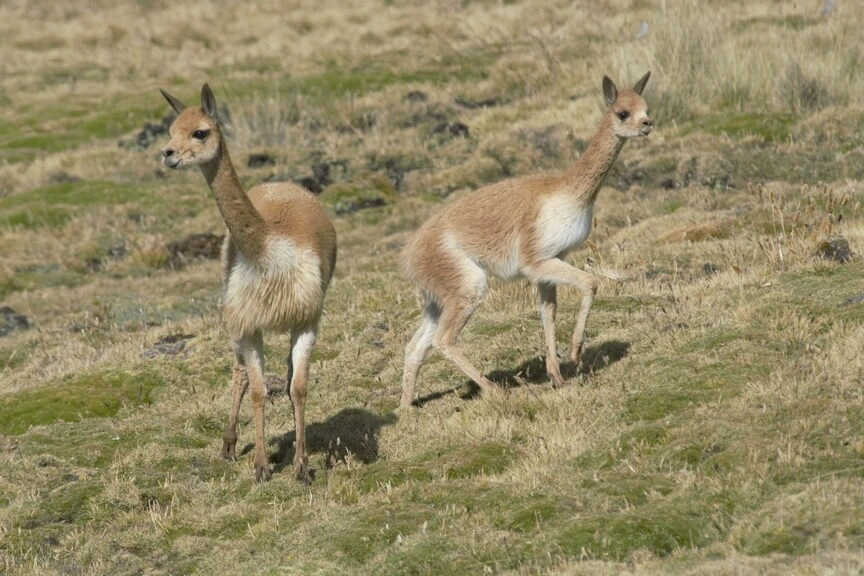
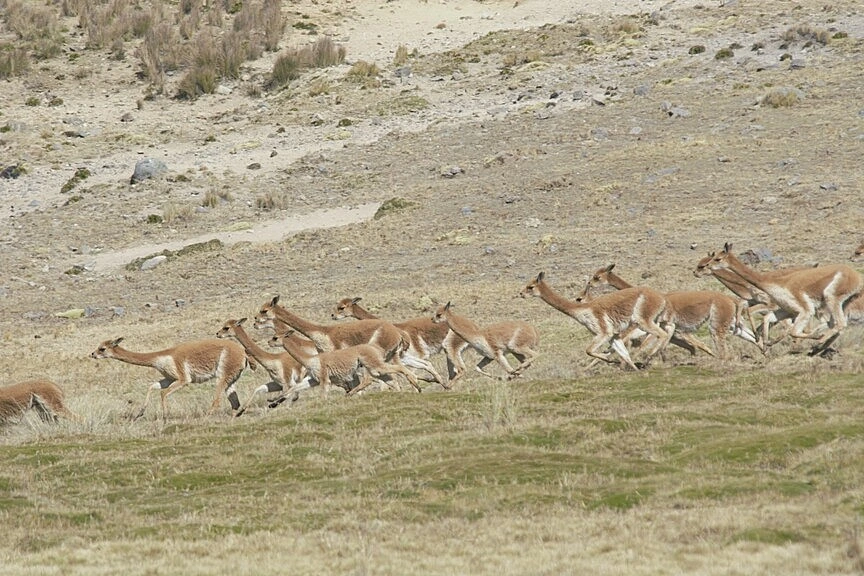
What else? Ah, yes — in “these lands of the Inca that the sun lights because God commands it,” as the beloved Peruvian song Y se llama Perú goes, it’s practically a priority — perhaps even a duty — to take a selfie with a llama or an alpaca. And if you’re lucky (and patient), you might even manage one with a small herd of vicuñas — the elegant South American camelids with soft white and cinnamon-coloured fleece that appear on Peru’s national coat of arms.
Here’s a tip: if you want to see plenty of vicuñas — naturally shy and elusive animals — venture into the high Andean plains during the chaccu, the ancestral ceremony where wild camelids are gently rounded up and shorn for their prized fibre. This colourful event, in which hundreds of people form a human chain, takes place in several parts of the country, including a district in the Lima region.
Lima, full of surprises
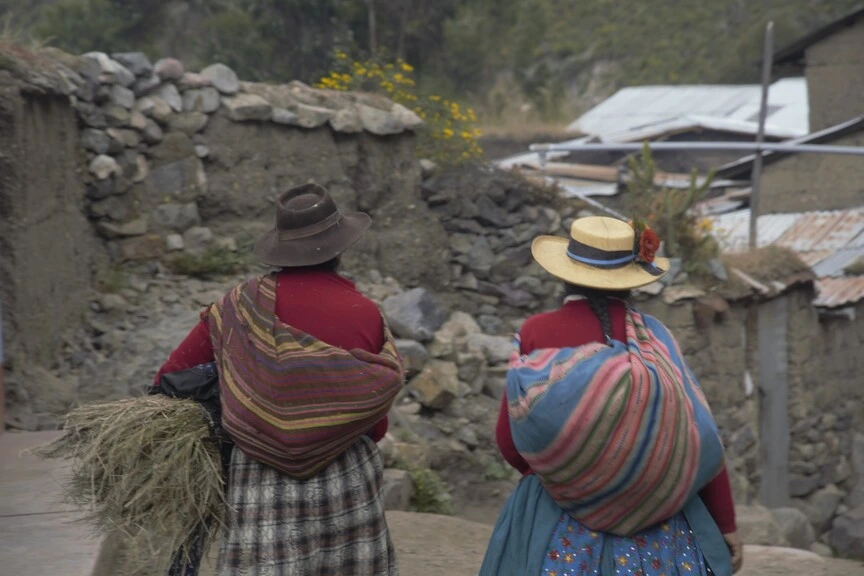
Yes, Lima — that Lima that never fails to surprise you. The Lima that is so much more than just a metropolis. The Lima that is, in fact, an entire region with beautiful beaches, inter-Andean valleys, pampas covered in ichu grass, and mountain ranges crowned with snow. In the city and its surroundings, you can tick off several of the activities mentioned in this unofficial list of things to do in Peru.
Still not convinced? Well, let me tell you that in this “cheerful, lively and festive Lima, thrice crowned land where the marinera was born” — if you’ll allow me to “sing” another traditional peruvian music— you can enjoy almost all the experiences I’ve mentioned: from hikes along the Qhapaq Ñan (there are several sections across its provinces), to delicious and daring culinary adventures, not to mention encounters with Andean wildlife.
Ah, my mistake — I should have said almost all of them. The real Machu Picchu is, of course, in Cusco, the “navel of the world”. But if you don’t mind the idea, visit Lima’s own “Machu Picchu”, as the “City of Fire” of Rupac is often called. Built high on a mountain by the Atavillos — a pre-Hispanic kingdom — its stone tombs (chullpas) and the sea of clouds that drifts over this highland sanctuary will surely take your breath away.
It’s not the only option. In 2019, married couple Luis Grados and Sandra Barojas came up with the idea of building a citadel in the Inca style in the district of Buenaventura (Canta province). Gran Imperio de Guaya was the name they chose for their monumental project. That’s its official name, although most people know it as “Lima’s Machu Picchu”.
These things happen. Well then, I’d better stop thinking about the Inca wonder —the real one and the alternatives— and focus on the vicuñas of the district of Gorgor (Cajatambo province). Graceful, elegant, slender and authentic —unlike the stones of Guaya— I saw them up close, really close, during the annual shearing festival. Want to know more? … I invite you to keep on reading.
In Search of Lima’s Vicuñas
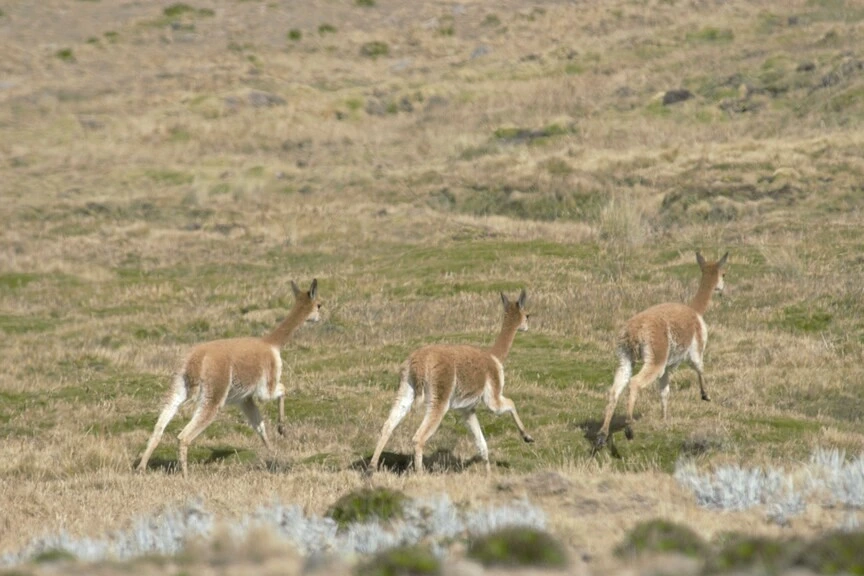
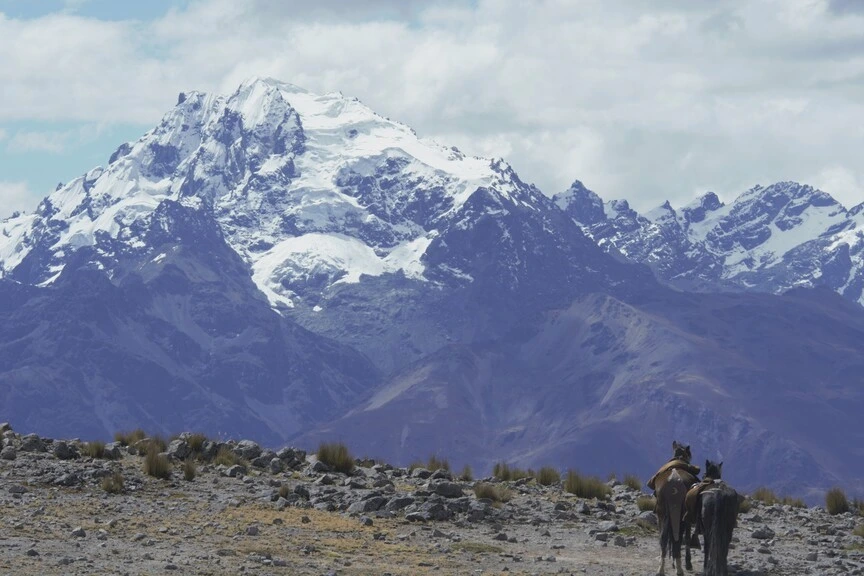
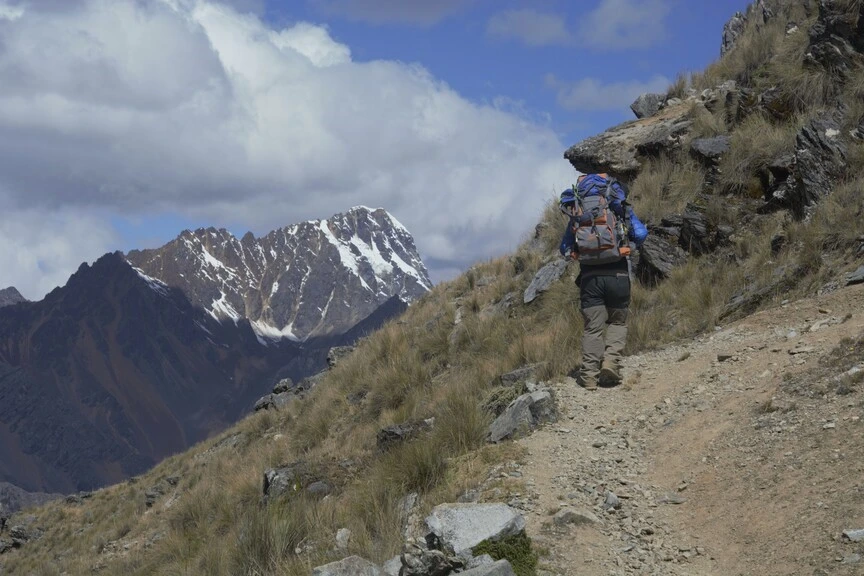
It wasn’t part of my plans. In fact, when I left home I had no idea that a vicuña chaccu was taking place in Gorgor, one of the five districts of the Cajatambo province. My goal on that journey was to explore the trails of a section of the Huayhuash mountain range and get closer to Yerupajá, Peru’s second-highest peak (6635 m).
If you’re passionate about trekking, you’ll know that the Huayhuash circuit is a true temptation for hikers from all over the world. In another story I’ll tell you about my experiences in this impressive chain of snow-capped mountains stretching across the regions of Lima, Áncash and Huánuco. For now, I’ll just say that—beyond the effort and the fatigue—every moment and every step is a wonderful adventure.
Exhausted but satisfied, I returned to the town of Cajatambo after several days of wandering between lagoons and majestic glaciers wounded by global warming. My plan was to recover my strength before heading back to Lima (distance: 296 km), until I happened to hear that a vicuña chaccu would be taking place in the highlands of Gorgor (distance: 61 km; travel time: approx. 2 hours from Cajatambo).
Needless to say, my plans changed. I was going to the shearing festival —a celebration I already knew, one I had experienced before in the Pampa Galeras Bárbara D’Achille National Reserve (Lucanas, Ayacucho)— and one I was keen to witness in a different place, to confirm that the recovery of the vicuña, a species once on the brink of extinction, was a miraculous reality in the country with the largest population of these camelids.
For many, many years, poaching dramatically decimated this wild species that brings such beauty to the highland plains. Those deadly bullets fed the illegal trade of one of the most coveted fibres in the fashion world. Once outside Peru, the fleeces were transformed into extremely fine and expensive garments. Those were the stages of a neat, profitable —and deeply harmful— business.
A Chaccu in the Highlands
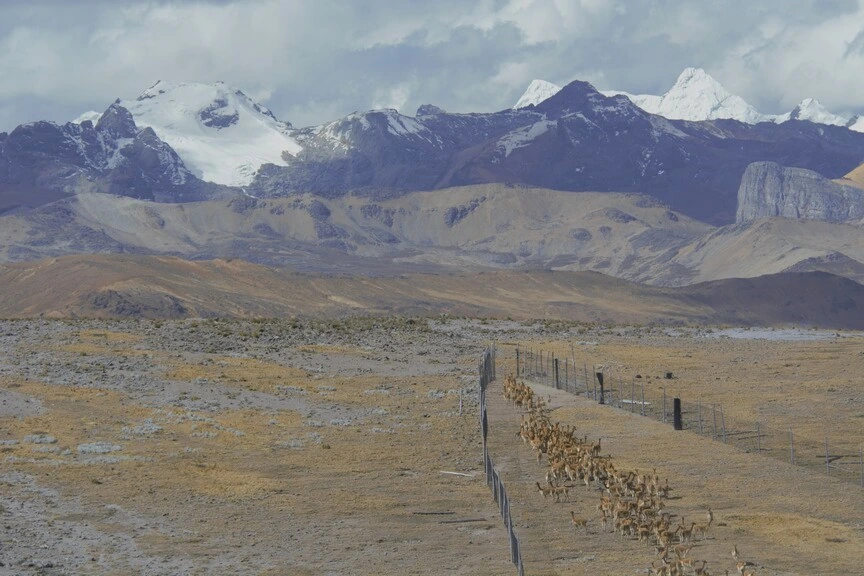
A day of festivity and celebration in July. A day for the community, a day of shared effort. A day of longing and ancestral memories. The chaccu is a pre-Hispanic tradition that faded when the spectre of extinction wandered across the Andes. In Inca times, the Vicugna vicugna —that’s the scientific name of this high-altitude mammal— was respected and protected. Anyone who harmed them faced severe punishment.
But on that morning and afternoon that still lives in my memory, there were no reprimands or punishments. Only anticipation, excitement and plenty of chatter in a landscape “watched over” by a chain of snow-wrapped mountains. “They’re close now. They’ll be here any moment,” the community members said, referring to their fellow villagers who formed the links of a colourful human chain. Together —all together— they would guide the animals towards the area where they would be shorn.
“Vicuña shorn, vicuña saved,” declared a representative of the Regional Government of Lima that day, on the plains of Yanahuairán and Huachaj, an area belonging to Cochas Paca (3400 m a.s.l.), a small community 15 kilometres from the main town of Gorgor. It was in that quiet, remote place that I felt like just another local farmer, because during the chaccu, every pair of hands counts.
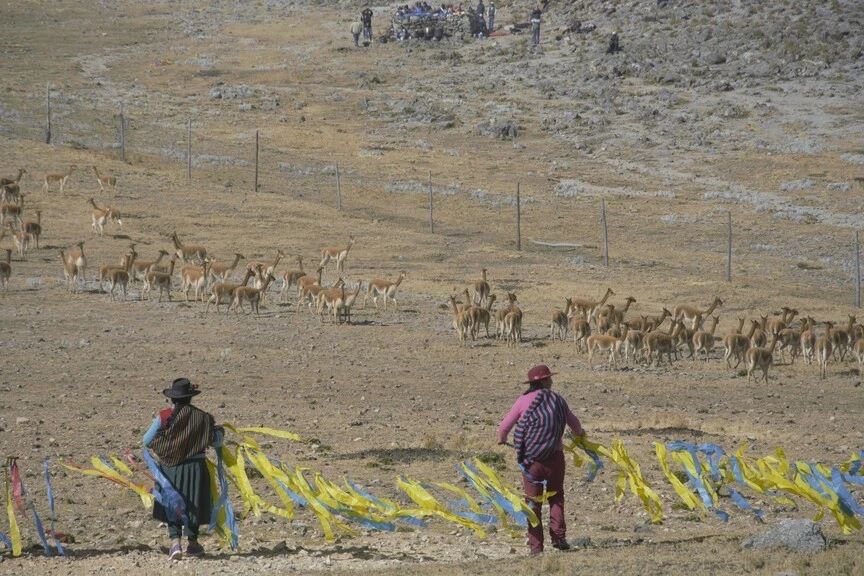
That’s just part of what I experienced on that unexpected July day in the highlands of Lima —a destination you simply can’t, and shouldn’t, overlook. And although many more things happened under Gorgor’s clear blue sky, I can’t quite find the words to describe them accurately. You’d have to be there to understand and to feel that the heart of original Peru still beats strongly.
From past to present. During the 2025 chacchu, “364 vicuñas were captured and 169 were shorn, highlighting the balance between sustainable use and conservation,” according to a report from the Regional Directorate of Agriculture of Lima. The tradition remains alive. The teachings of the ancients were never forgotten. They had merely been asleep among the mountains.
November 13, 2025