


Lima: The Pyramids of Bandurria
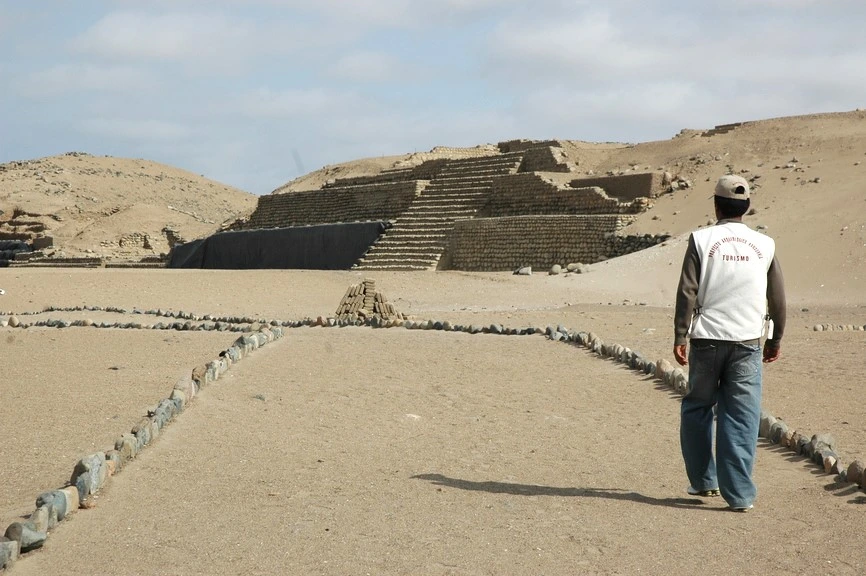
They thought they were hills. Hills that didn’t draw much attention — after all, they didn’t rise imposingly like the mighty Andean peaks that gleam when the sun lights up their snowy cloaks. Nor were they covered in lush, tangled vegetation like the biodiverse mountains of the cloud forests or the high jungle.
Quite the opposite. Their slopes were dry and barren. Their only charm lay in their closeness to the ocean’s edge. And it wasn’t that their location was especially extraordinary or privileged — the coast has many rocky, sandy watchpoints — but somehow, places near the beaches and waves of the Pacific always have a certain magic about them. Perhaps it’s because life is sweeter by the sea?
I don’t know — just as no one knew for a very, very long time that those “hills” — without snow, without greenery, not very tall and seemingly unremarkable — weren’t hills at all, even though everyone believed they were. Why would they have doubted it? They weren’t a mirage or an optical illusion. Not at all. Since the time of their grandparents, those mounds had stood there, facing the sea on the plain of Bandurria.
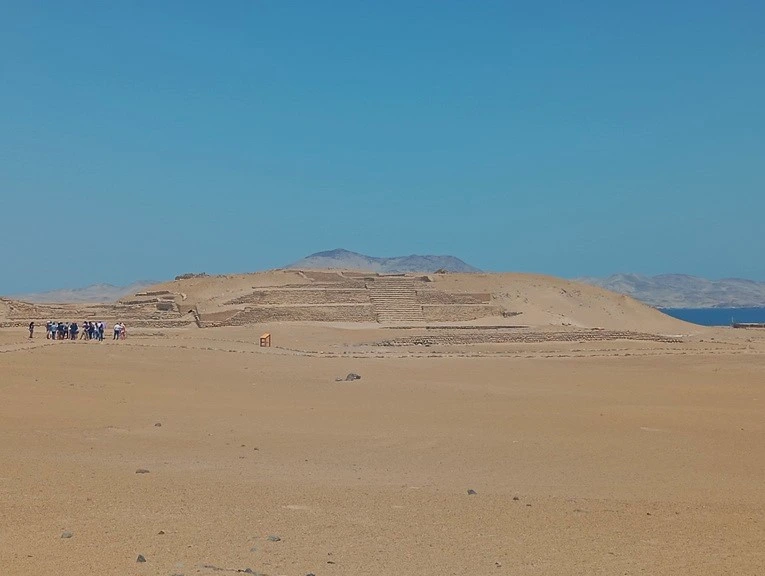
Sorry, let me correct myself — those “hills” are still there, and everyone can still see them, though now they know they aren’t hills at all, but pre-Hispanic pyramids built thousands of years ago. This truth began to unfold in April 1973, when a flood transformed the coastal landscape of Paraíso de Playa Chica in Huacho (province of Huaura), an archaeological site — and a bit more — located 143 km north of Lima, the capital of Peru.
Today, now that it’s known those unremarkable hills were never hills, it’s an excellent idea to leave Lima and visit the monumental archaeological site of Bandurria — yet another reminder that in Peru, appearances can be deceiving when it comes to ancient history and cultural heritage. So much so that what once seemed like simple mounds turned out to be a thousand-year-old treasure that brings you closer to the dawn of Andean civilisation.
A Fortunate Discovery
It wasn’t an archaeologist with an Indiana Jones look who discovered the pre-Inca site of Bandurria. It wasn’t a scientific expedition organised to “unearth” the architectural legacy of a civilisation that emerged 5,000 years ago. Nor was it the lucky find of an enthusiastic university professor and their young students during a field project.
It wasn’t even the huaqueros —as the looters of ancient treasures are called in Peru. The first person to realise that something important was hidden along the Huacho coast was an engineer named Domingo Torero Fernández Córdova. His “discovery” came about through an unexpected event that caused great concern: the overflowing of the Santa Rosa irrigation canal.
The force of the water revealed a large number of ancient materials. When he saw them, he suspected that these remains might belong to Peru’s cultural heritage. With the help of his father, he quickly gathered a group of neighbours and students, and together they set out to protect what the flood had uncovered.
That moment marked the beginning of the recovery of the pyramids, sunken plazas, and circular dwellings on the Pampa de las Bandurrias —named after the ibises (bandurrias) that inhabit the nearby El Paraíso wetland. Just a few steps from the pre-Hispanic site, this body of water is home to 125 bird species —both resident and migratory— as well as five species of fish and two of reptiles.
But let’s not “fly” too far from the subject and instead “land” on the archaeological side of things. The first person to study the site was Dr. Rosa Fung, whose findings were astonishing: the waters of Santa Rosa had performed a miracle by uncovering a precious legacy from the Late Preceramic Period. Later, in 2005, a project led by Alejandro Chu Barrera revealed the existence of four stepped pyramids, confirming that this seemingly barren land was, in fact, one of the earliest urban centres on the Peruvian coast.
A Journey of Five Thousand Years
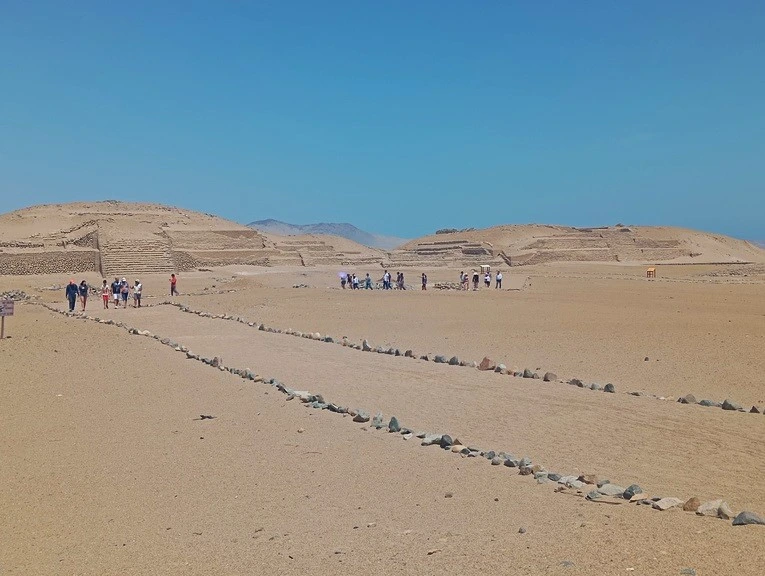
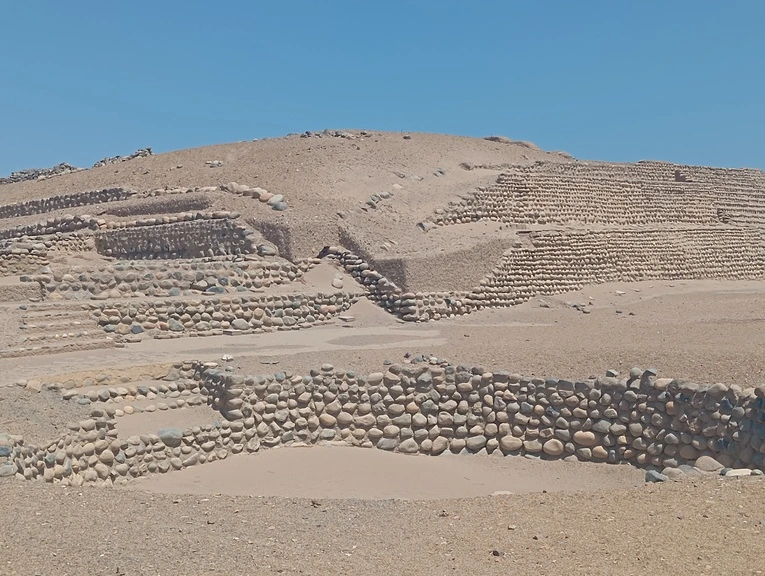
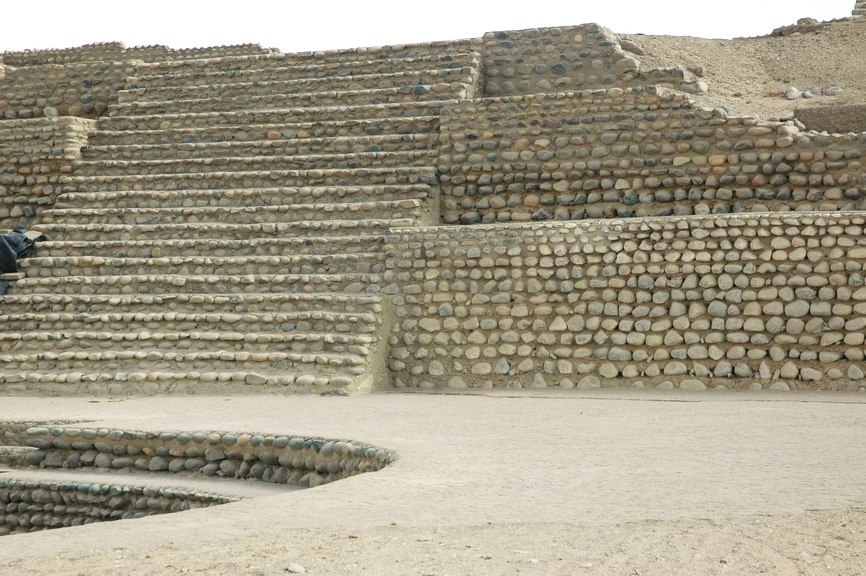
“They thought they were hills,” explains the local guide as he points towards one of Bandurria’s pyramids, built from river stones and mud mortar. This ancient fishing village, covering around 20 hectares, is believed to have been inhabited between 4000 and 2000 BC. In its monumental zone, researchers discovered what are considered the earliest examples of ceremonial stone architecture in the Andes.
During that time, fishing and the gathering of shellfish ensured the community’s survival. Blessed by a rich and generous sea, the settlement grew and flourished, transforming into a centre of political and religious power. Its circular plazas, dwellings, temples, and the imposing pyramids—some reaching up to 12 metres high—stand as silent witnesses of that greatness.
A greatness that goes far beyond tourism. Due to its remarkable age (5,000 years), there is ongoing debate over whether Bandurria predates, coincides with, or postdates the Sacred City of Caral in the Supe Valley (Barranca province), which is recognised as one of the cradles of civilisation on Earth. Regardless of the chronology, it is clear that both cultures shared a common ancestral tradition.
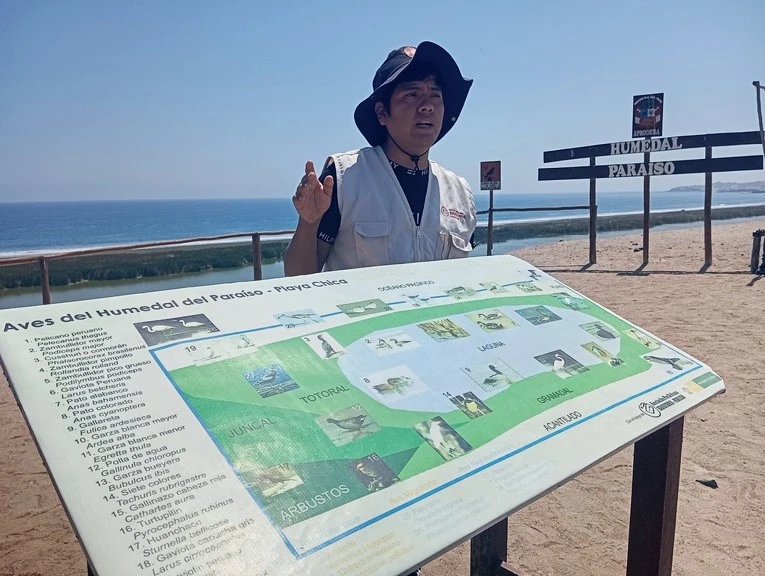
El costo incluye el guiado por el sector monumental y doméstico de la zona arqueológica. Esta se encuentra en excelente estado, gracias a la protección de los miembros de la Asociación Pro Defensa Bandurria–Paraíso. Al final del recorrido llegarás al mirador del humedal Paraíso que está al ladito del mar. Historia y naturaleza, cultura y biodiversidad en un mismo destino.
Now you know — if you want to get closer to the roots of civilisation, escape Lima by taking the Panamericana Norte highway on one of the buses heading to Huacho (departing from the city centre or Plaza Norte terminal) and get off at the turn-off for the archaeological site (km 141). From there, it’s a two-kilometre walk along a clearly marked path, so you won’t get lost. Entrance costs 7 soles.
This fee includes a guided tour through both the monumental and domestic areas of the archaeological zone. The site is in excellent condition, thanks to the protection and care of the Asociación Pro Defensa Bandurria–Paraíso. At the end of your visit, you’ll reach the viewpoint overlooking the Paraíso wetland, right beside the sea. History and nature, culture and biodiversity — all beautifully intertwined in one unforgettable destination.
Birds in Paradise
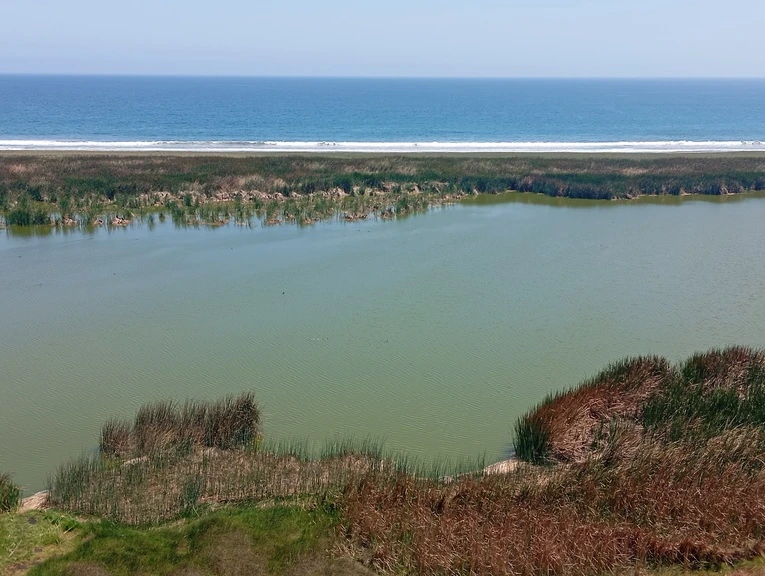
El Paraíso has two sections — not a biblical truth, but a fact easily confirmed in Huacho. This coastal wetland is made up of two main bodies of brackish water, their levels influenced by the tides and by seepage from the Santa Rosa irrigation canal, built in the mid-20th century and responsible for the fortunate overflow of 1973.
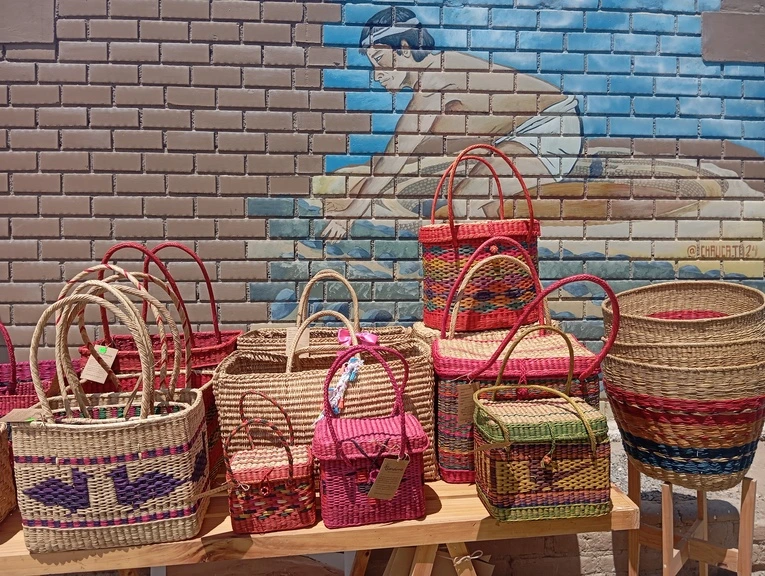
Various studies have shown that the existence of the wetland made life easier for the ancient inhabitants. Its waters provided them with food and useful plants such as totora reeds, still used today in many ways (at the end of your visit, you’ll see handicrafts made from this versatile plant fibre). These natural resources allowed people to settle along the coast and develop their civilisation.
If you have a special interest in birdwatching, stay a little longer at the viewpoint. With some luck — and a bit of patience — you might spot grebes, gulls, vermilion flycatchers, pelicans, and herons, among other species. And even if birdlife isn’t your thing, you’ll still enjoy the scenery. After all, it’s not every day you come across a lagoon bringing life and freshness to the coastal sands.
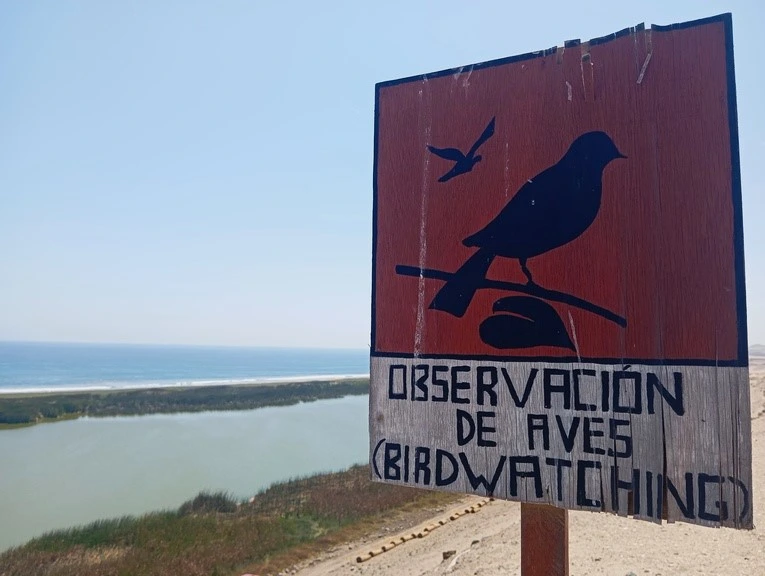
Not only that. Think about it — you’re looking at the very same landscape once seen by the men and women who, 5,000 years ago, built the pyramids and enclosures of Bandurria. Ancient visions, filled with echoes of the past, that will transport you to a world that no longer exists. Everything is different now, yet here, a fragment of that long-buried history has been preserved.
Yes, because those pyramids weren’t just hills whose only charm was their closeness to the sea. That’s what everyone believed. But in Peru, when it comes to ancient history and ancestral heritage, appearances can be deceiving — as I told you at the beginning. You must always wonder, because beneath a mound of sand or deep within a dense forest, it’s entirely possible to find a lost city or a temple from millennia ago.
October 12, 2025