


Lima Provinces: Destinations close to the Peruvian capital
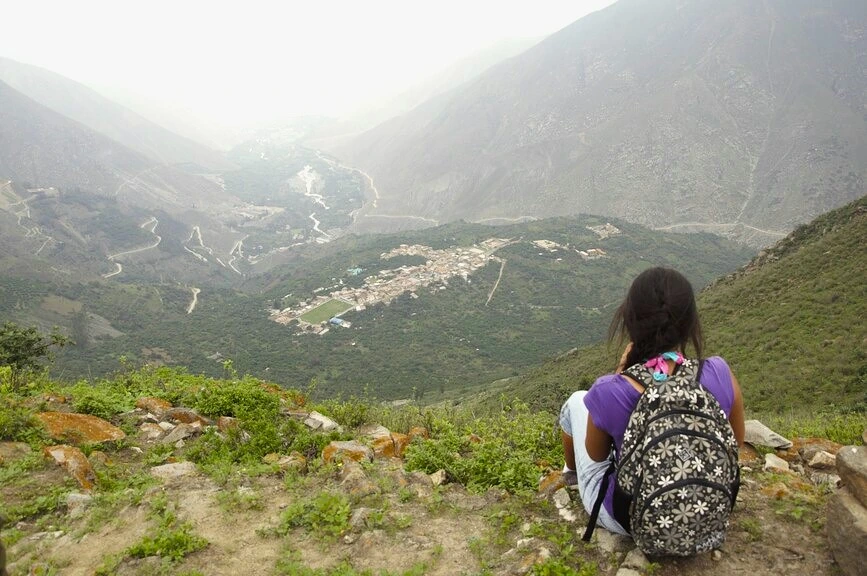
There’s more than one Lima. There’s the old colonial centre, a UNESCO World Heritage Site. There’s the Lima of grand avenues, financial hubs and shopping centres. The Lima of sand and waves along the Costa Verde. And, of course, the Lima of flavours — where tradition, creativity and fusion come together in its markets, huariques (local eateries), and fine-dining restaurants.
But those aren’t the only ones. Peru’s capital has many faces: it’s pre-Hispanic in its archaeological sites like Pachacamac and Huaca Pucllana; it’s memory, art and culture in its magnificent museums; it’s vibrant nightlife and sleepless celebration in its bohemian neighbourhoods; it’s a promise of the future for the countless migrants from every region who have found — and continue to find — a home in its 43 districts.
Lima is not just a big city. Lima is also a department — a region made up of ten provinces. A vast and fascinating land that stretches from sea to mountains, valleys to high ranges, from ancient civilisations to explosive biodiversity. A string of destinations waiting to be discovered. A promising adventure through adobe cities, coastal fishing villages, rural towns, waterfalls and lagoons, towering mountains and snow-capped peaks.
What do you think? You knew it, didn’t you! Would you be up for discovering the historical and natural attractions of Lima’s provinces? If your answer is yes, keep reading — in this story, you’ll find plenty of ideas to help you escape the city for a day or two. Then you’ll realise that the charms of the capital stretch far beyond its urban limits.
They reach the stone and adobe walls of pre-Hispanic sites, the sands of the desert coast, the trails that climb up into the mountains, the hot springs that soothe and heal — and so many other places that travellers often overlook. That won’t happen to you, because in this and other articles, we’ll introduce you to all of them.
Archaeological route
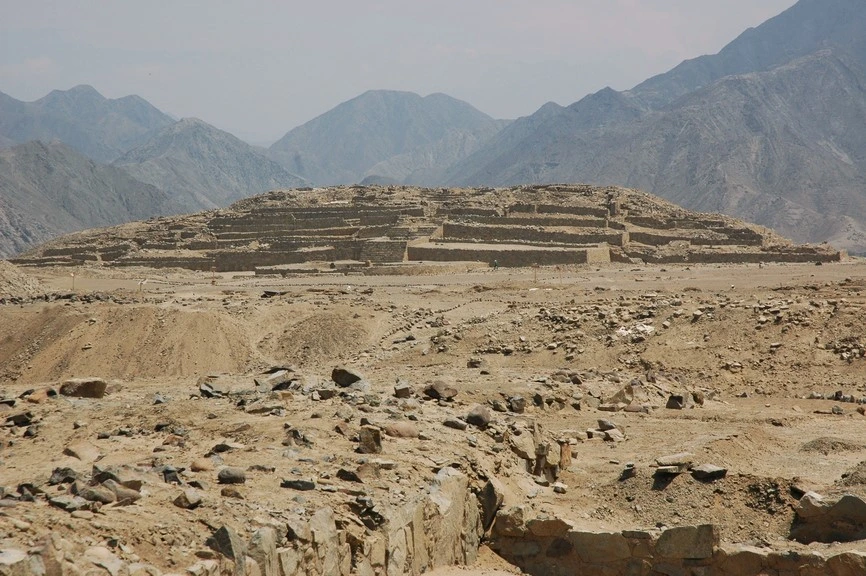
If you want to travel thousands of years back in time to connect with the deepest roots of Andean culture, visit Caral, the Sacred City; Áspero, a fishing town; Peñico, a meeting point between the coast and the highlands; and Vichama, an agro-fishing city.
Step back 5,000 years along the Caral Route, an archaeological adventure that will take you to “the oldest urban centres in the Americas, where cultural remains have been recovered and the knowledge that gave rise to Andean civilisation has been revealed — a process that endured until the Inca Empire”, as stated on the official website of this archaeological project.
The Sacred City, brought to light in 1997 by Dr Ruth Shady, was the capital of the first civilisation in the Americas. According to the Caral Route website, this civilisation “emerged in the north-central region of Peru 5,000 years ago, between 3000 and 1800 BC.” In this time capsule in Barranca province (207 km north of Lima), you’ll find pyramids, plazas, temples, houses and workshops built from adobe and stone.
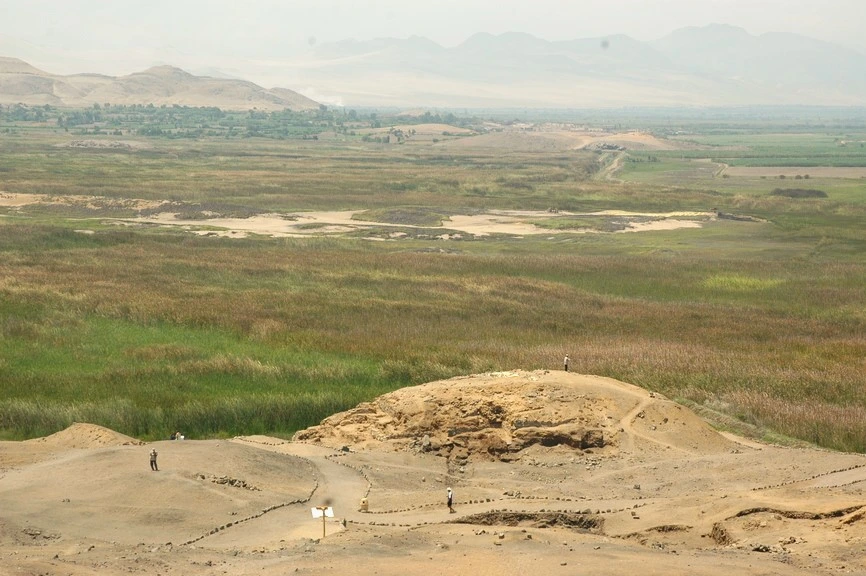
Caral —located in the Supe Valley— is one of the cradles of civilisation on the planet. In this remarkable landscape, 25 associated urban centres have been identified. Áspero (at km 191 of the Pan-American Highway North, in the province of Barranca), a fishing settlement with seven stepped pyramidal structures, and Peñico (34 km from Caral, also in Barranca), where Andean and coastal peoples once met and exchanged, are part of a monumental legacy that will truly amaze you.
The route also includes the agro-fishing city of Vichama (in the district of Végueta, province of Huaura) — a place blessed with fertile seas and productive valleys, just 162 km north of Lima. Here, five imposing pyramidal buildings reveal the grandeur of a culture whose discovery reshaped our understanding of Andean development. Such is the significance of the archaeological treasures found across Lima’s provinces.
A sea of fun
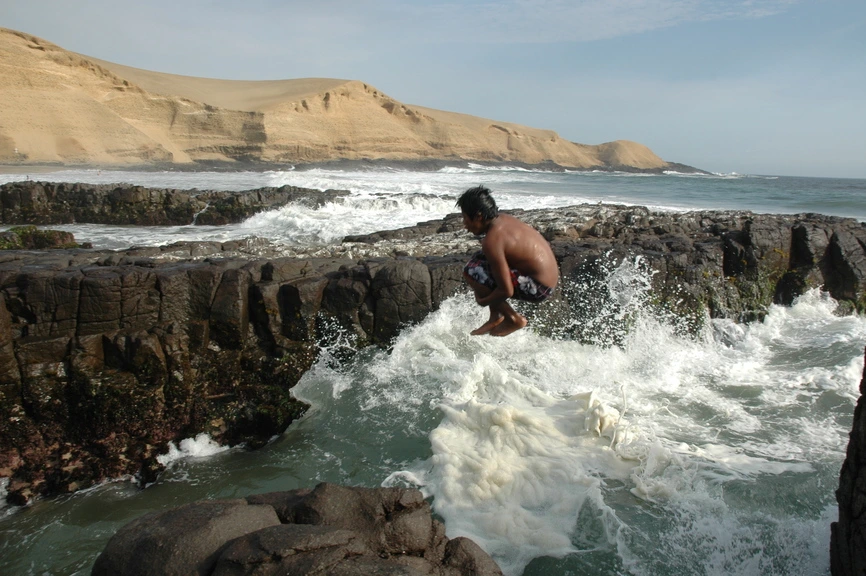
If you love the sea, escape to the fishing coves and alluring beaches of Cañete, Huaral, Huaura and Barranca — the coastal provinces of Lima. Just outside the metropolis, you can enjoy sand and surf, sea breeze and sunsets, relaxation and rest — both in the ocean and in seaside restaurants serving the very best of Peru’s ocean-inspired cuisine.
Encounters with the Pacific await you north of the capital. Follow your compass along the Pan-American Highway North, and the sea of Chancay (in the province of Huaral) will greet you at Chacra y Mar beach (km 75, at the end of the Pasamayo bypass). In this lively seaside spot, you’ll find the Eco Truly Park — a self-sustaining Krishna community where peace and spirituality fill the air.
With that same feeling of harmony and calm, you’ll reach El Paraíso — and no, it’s not Adam and Eve’s Eden, but one of the most popular coastal destinations in Huacho, the capital of Huaura province (around km 135 of the Pan-American Highway). Its gentle waves, wide shores and nearby wetlands — home to a variety of bird species — more than justify its name.
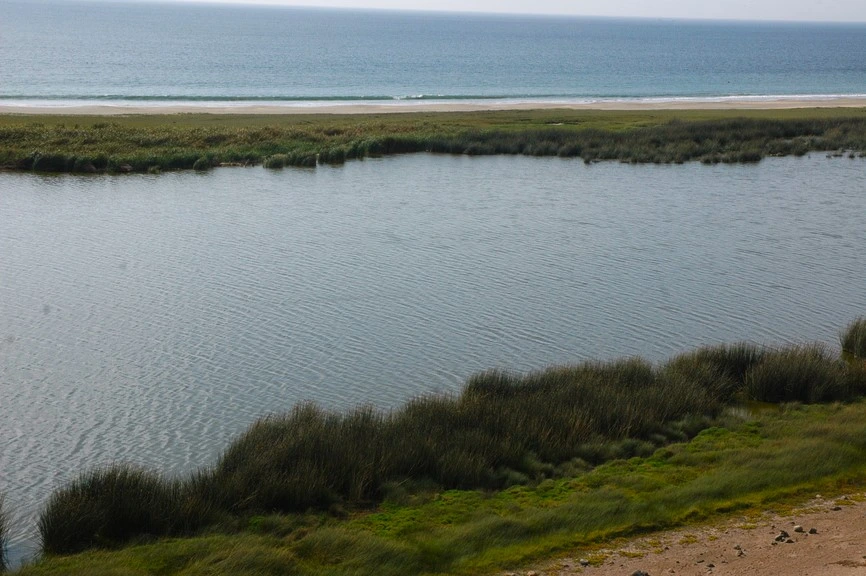
As a precaution, don’t eat any apples during your stay — you wouldn’t want to be expelled like in the biblical story, though in this case, it wouldn’t be such a terrible punishment. That’s because, a bit further north, you’ll find the Barranca beach circuit (between km 173 and 193 of the Pan-American Highway), featuring spots like Quitacalzón, Caleta Vidal, La Isla and Áspero, among others. When it’s time to eat, make sure to order a hearty tacu tacu.
Farewell to the north — time for a change of direction. Leave Lima city via the Pan-American Highway South towards the province of Cañete, where you can surf and go birdwatching at Puerto Viejo (km 70); enjoy the modern seaside resort of Asia (km 100); and buy fresh fish straight from the small pier at Cerro Azul (km 131). Then, head back to the “City of Kings” already thinking about your next escape. Are you heading to the mountains?
High-altitude destinations
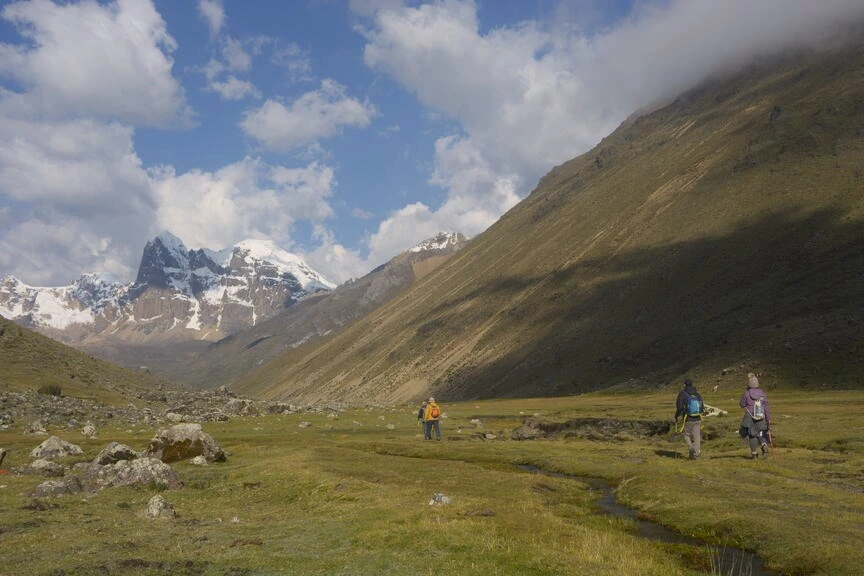
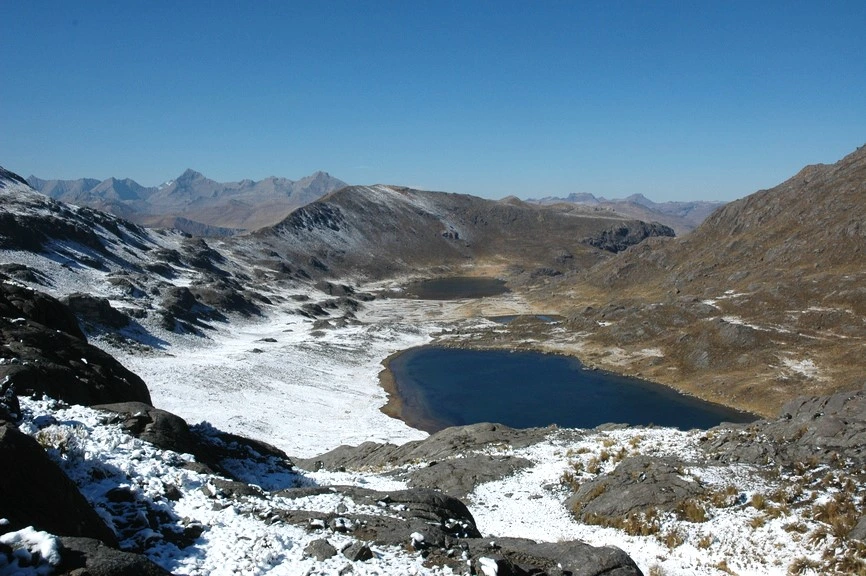
No mountains, snow or high altitudes in Lima? Well, that’s both true and false. The city itself lies on the coast, but the region is home to places thousands of metres above sea level — perfect for hiking along mountain slopes, cycling on narrow, dusty trails, camping beside tranquil lagoons, and even taking part in traditional earth-offering ceremonies.
This is the highland side of Lima — where you might feel the effects of altitude, where ichu grass covers the hills and hail sometimes falls, where offerings are made to the Pachamama (Mother Earth) and the Apus (sacred mountain spirits) of the La Viuda (in the province of Canta), Raura (Oyón) and Huayhuash (Cajatambo) ranges — the last of which is shared with the regions of Áncash and Huánuco. Their trails form part of one of the most famous trekking routes in the world.
Huayhuash is both a dream and a challenge for mountain and trekking enthusiasts — long, demanding journeys through wild, uninhabited territory. It’s just you and your footsteps climbing mountain passes that lead to majestic snow peaks, turquoise lagoons and simple campsites where the wind bites and the cold is intense.
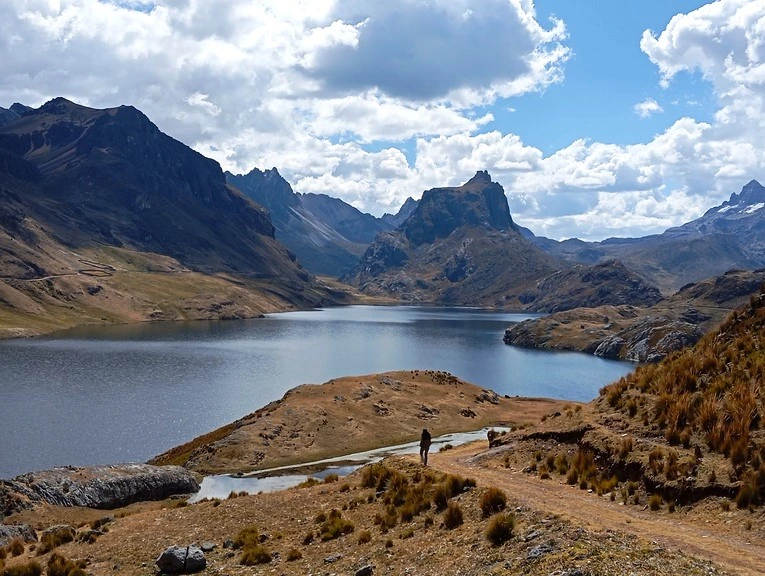
Ah, never mind. The landscape warms the soul and inspires you to keep walking through the mountain range where Yerupajá (6,634 m), Peru’s second-highest peak, stands tall. The same magic can be felt in the highlands of the Nor Yauyos-Cochas Landscape Reserve — a paradise of waterfalls, mirror-like lagoons, archaeological sites and traditional farming villages in the provinces of Yauyos (Lima) and Jauja (Junín).
Looking for more options? There’s the plateau and stone forest of Marcahuasi (province of Huarochirí); the hot springs of Churín (province of Oyón), perfect for families and wellness seekers; the ghost town of Pampas; the “City of Fire” of Rupac (province of Huaral); and a long list of other places that prove there are indeed many Limas — those Limas that are waiting for you.
October 8, 2025