


From Lima to Jauja, the first capital of Peru
In medieval Europe, people spoke of a marvellous land where you didn’t need to work to live comfortably and happily. In those days, rumours spread of a fabulous country — no one quite knew where it was, though many insisted it had to be somewhere around Portugal or Spain — where rivers of wine and milk flowed freely, mountains were made of cheese, and the trees bore the most exquisite roast suckling pigs as their fruit.
The wonders of that paradise knew no bounds. Everything there was peace, abundance, pleasure and pure relaxation. So much so that, according to the most enthusiastic tales, roasted geese would fly straight into diners’ mouths, houses were built of cakes and pastries, the streets were carpeted with sweet temptations, and dogs were tied up not with rope, but with delicious strings of sausages.
Sadly, the exact location of this dreamlike place — where everyone, or almost everyone, longed to live (for there are always exceptions to prove the rule) — was completely unknown. Even so, simply mentioning the Land of Cucaña — as this almost-paradise was known at the time — was enough to spark hope in a historical period marked by hardship and austerity.
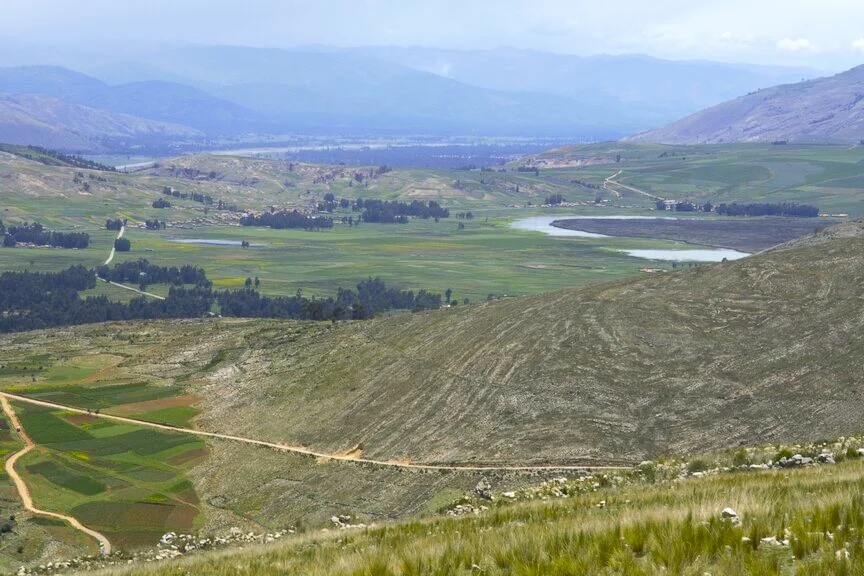
In 1534, when Francisco Pizarro and his men were making their way towards Cusco, they stopped in a broad and welcoming Andean valley that the “Children of the Sun” called Jatunsausa or Hatun Xauxa. The conquistadors — or invaders — were utterly enchanted by the place, so much so that they were quick to associate it with the mythical, legendary and perhaps even non-existent Land of Cucaña.
The reasons behind that reaction are explained by Carlos Hurtado Ames, a historian from the Universidad Nacional de Trujillo. Speaking to the BBC for an article, he noted that “Jatunsausa was an Inca city that, according to the chroniclers, had a replica of the Qoricancha (which in Quechua means ‘golden temple’), as well as a garden made of gold, with plants, animals, shepherds and more. It was dazzling.”
The valley turned capital
The tales and descriptions of this paradise in Peru’s central highlands quickly crossed the ocean. Once in Europe, the word jauja (derived from xauxa or sausa) began to be used as a byword for prosperity and abundance. Its impact was so great that in the 16th century expressions such as “You’d think you were in Jauja”, “The Land of Jauja” or “Off you go to Jauja” were coined.
The years — and centuries — passed, yet the positive meaning of the word jauja has endured to this day. If you look it up in the Diccionario de la Lengua Española, you will find the following definition: “Used to denote anything presented as a model of prosperity and abundance.” It also specifies that the term refers “to Jauja, a valley in Peru famous for the richness of its land”.
A paradise, an Eden and a Cockaigne (these are the other meanings listed in the dictionary) that would go on to captivate the Iberian conquerors. So much so that they settled there for several months, peacefully and comfortably enjoying the plentiful food and favourable conditions of the valley where Francisco Pizarro founded the city of Santa Fe de Hatun Xauxa on 25 April 1534.
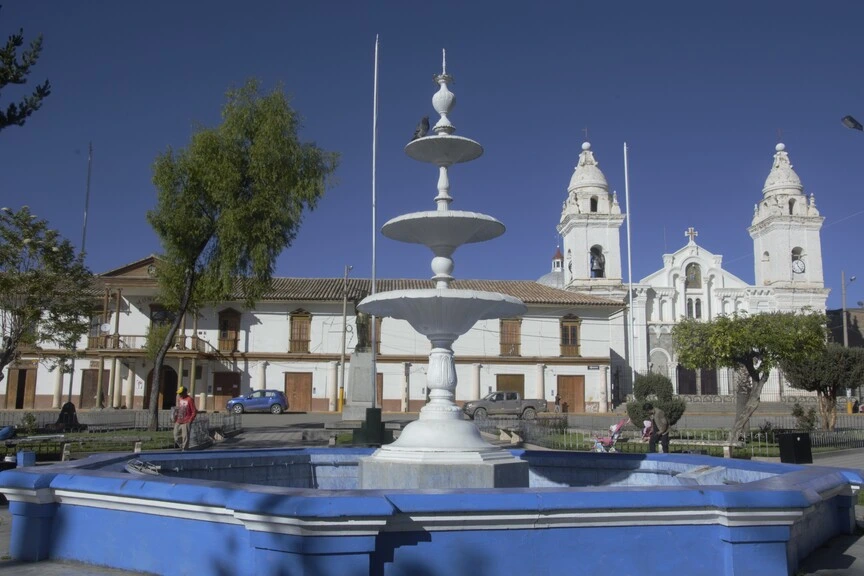
Not only that. The newly founded city would go on to become the capital of the Governorship of New Castile — in simpler terms, the first capital of Peru. Although that status changed on 18 January 1535, with the foundation of the “City of the Kings” (the original name of Lima), the memory endures and remains a source of pride for those born in the Land of Jauja.
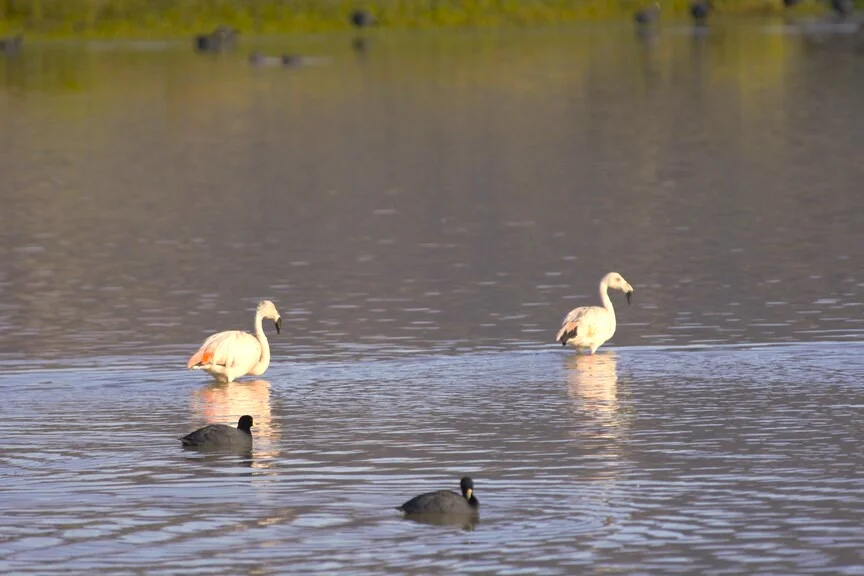
A “country” with history, tradition and culture, today it forms one of the provinces of the Junín region. A “country” located at 3,392 metres above sea level and just 265 kilometres east of Lima. A “country” you can reach by road (around six hours) or by air (just 50 minutes). A “country” without rivers of milk or wine, and without houses made of cakes — but with shimmering lagoons that shelter a rich variety of birdlife and archaeological sites built from stone.
Capital delights
From bustling Lima — the colonial and republican capital — to peaceful Jauja, the brief, early capital where Francisca, the mestiza daughter of Francisco Pizarro, was born, and to the fertile valley that became synonymous with abundance. That is the journey, the route, the getaway I’m inviting you to experience — so that when you return home, you can tell your family and friends that you’ve been to the mythical Land of Cucaña.
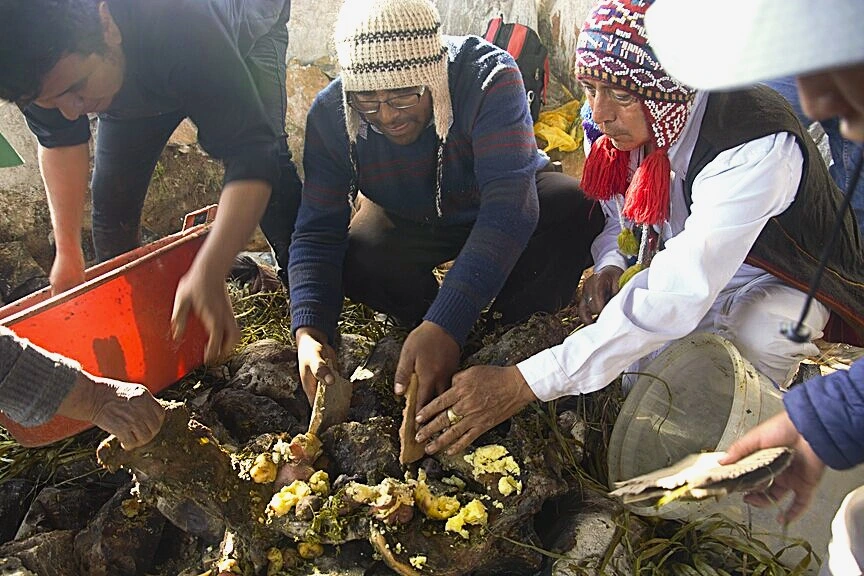
Now, I should warn you: you won’t find roast pigs hanging from the trees. What you will find are great pans where pork is fried until perfectly crisp, turning into irresistible chicharrones. You’ll also discover a wonderful variety of meats and tubers prepared using the ancestral cooking technique known as pachamanca — a word that in Quechua means “earth pot” and in Aymara, “food from the earth”.
In rural areas, the pachamanca is something of a culinary ritual. It begins with a hole being dug into the ground. Inside, carefully selected river stones are placed and heated beforehand. Their retained heat slowly cooks the meats — beef, lamb, pork and more — seasoned with aromatic herbs, along with potatoes, sweet potatoes, ocas and broad beans that complete this hearty and deeply traditional dish.
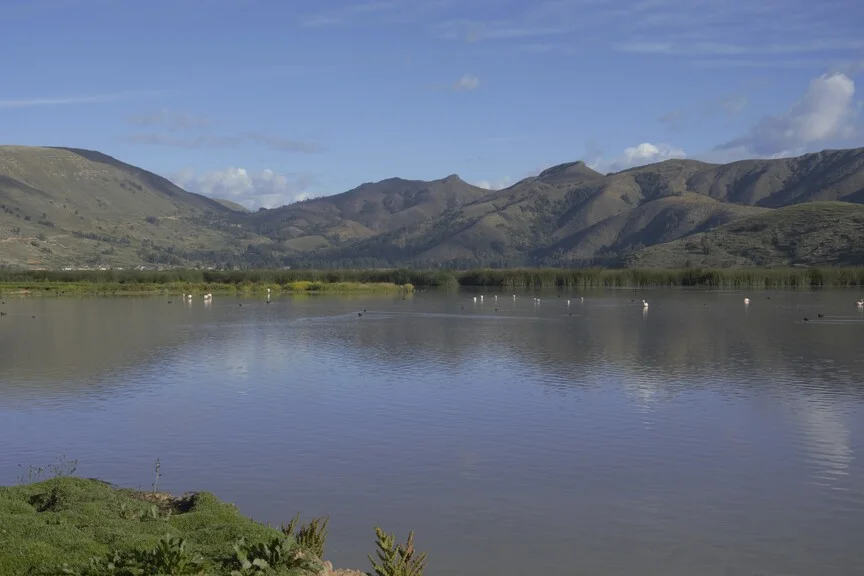
Once the ingredients have been carefully arranged, the pit is covered with leaves and earth and left to cook for two or three hours. The result is unforgettable — a true treat for your taste buds. You’ll feel the same delight when you try the trout prepared in a variety of ways and served by the shores of Laguna de Paca (3,362 m above sea level), a splendid mirror-like lake waiting for you just six kilometres from Jauja’s Plaza de Armas, declared a National Historic Monument in 1989.
Other Jauja specialities include cuy colorado (spiced guinea pig) and patasca — a hearty soup made with hominy maize, cow’s trotters and tripe. If you fancy something sweet, try the mazamorras made from pumpkin, chuño and pata — yes, beef trotters once again, but this time transformed into a thick jelly-like pudding. Beyond its sweetness (it’s flavoured with panela, cinnamon and cloves), its high collagen content is said to be wonderfully nourishing.
Tunantada: a dance from Jauja
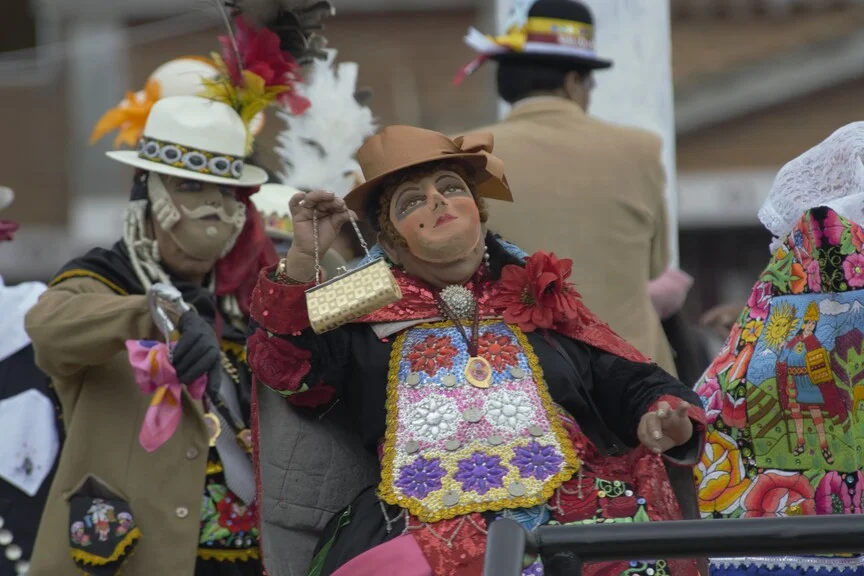
It’s not all about good food in Peru’s first capital. If you’d like to experience a vibrant traditional celebration, plan your visit to Jauja between 20 and 25 January. Each year, those days are filled with music and dancing in honour of Saints Sebastian and Fabian. During the festivities, the district of Yauyos is quite literally “taken over” by troupes of masked dancers who satirically portray a range of characters from Andean and mestizo Peru.
The tunantada — that’s the name of the dance — “was born in Huaripampa (one of the districts in the province of Jauja), where locals saw Viceroy Toledo arrive with his entourage, accompanied by an Argentine muleteer merchant, to the sound of guitars. It was that moment which the people of Huaripampa sought to recreate as a mockery and satire,” explains the website Tunantadas de Amor, drawing on oral tradition. The viceroy in question was Francisco de Toledo.
A few years ago, I attended the festival myself. I saw the huatrilas (Indigenous figures), the chutos (Creole characters) and the príncipes or tunantes (Spaniards), among many others who, through their elaborate costumes, expressive masks and measured, dignified steps, keep this artistic tradition alive — recognised as National Cultural Heritage since 2011. On that trip, I also made the most of my mornings to explore other attractions around Jauja.
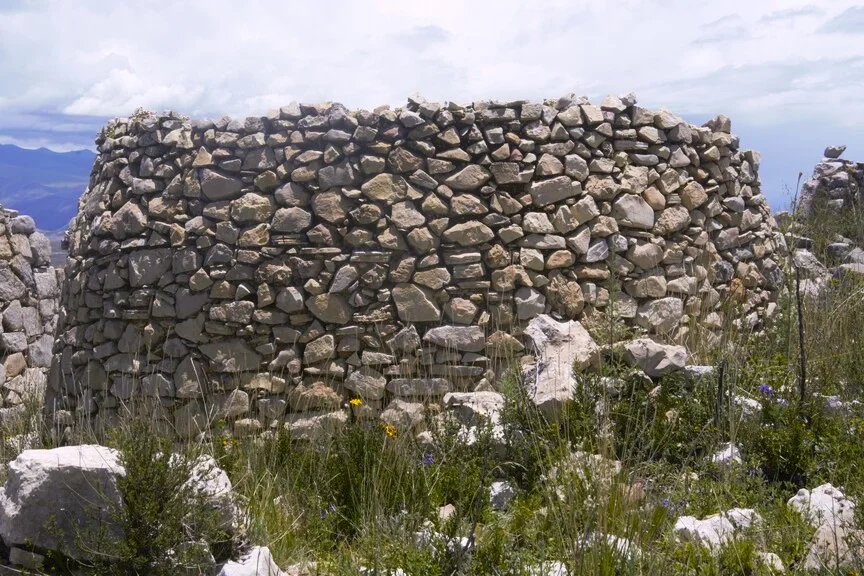
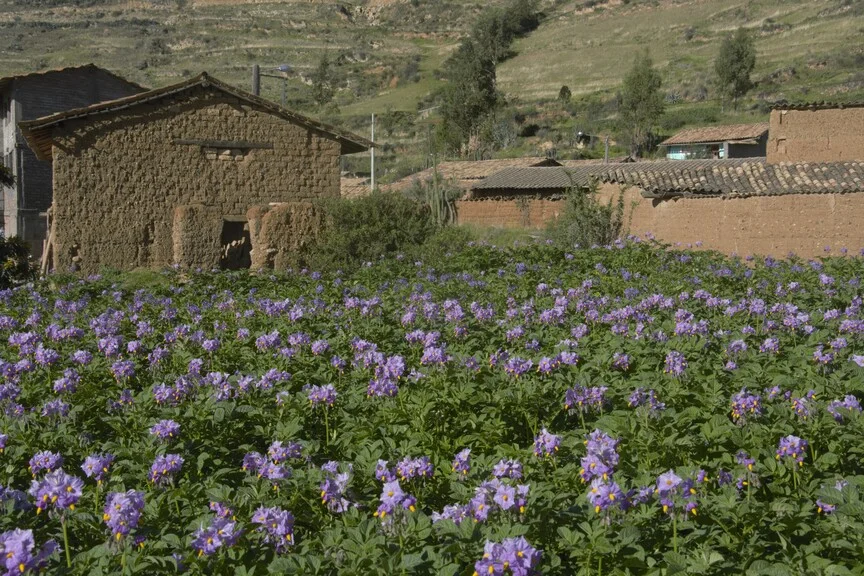
I explored Paca, where I spotted parihuanas (Andean flamingos) and blooming potato fields stretching across the countryside. I also ventured, for the very first time, along sections of the Inca road that once led to Cusco and up to the archaeological site of Tunanmarca (3,899 m above sea level). Its name translates as “the village on the hilltop” — and quite fittingly so. It was built and inhabited by the Huanca people until the arrival of the Incas, around 1460.
Defensive walls, courtyards and a main square. Storehouses, circular and rectangular dwellings, and an efficient hydraulic system — all form part of this remarkable archaeological legacy. From here, you’re rewarded with sweeping panoramic views over the province of Jauja, the land of the Xauxas, the original people who once inhabited the marvellous valley where the Spaniards founded Peru’s first capital.
January 16, 2026