


Merry Christmas in Lima, Peru
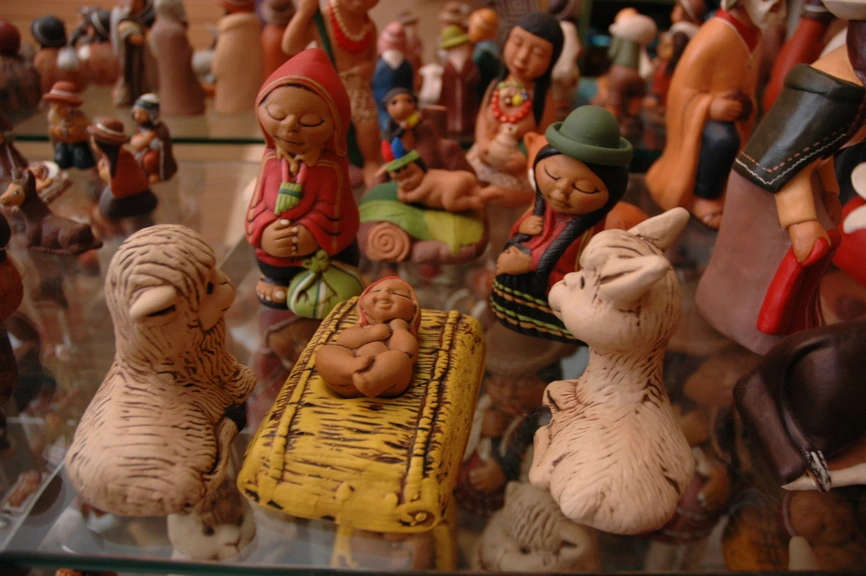
Christmas arrived in Peru with the Spanish conquest — or invasion. It was during those uncertain and confusing times that the idea began to spread of a God who was Father, Son and Holy Spirit. An all-powerful and ever-present God who sent his firstborn, Jesus, to save humanity from sin and guide it towards eternal life.
And although the Bible does not mention the exact date of this extraordinary event, in the 4th century “Emperor Constantine and Pope Julius I decided to celebrate the birth of Jesus at a time that coincided with Rome’s most popular festivities, in order to encourage conversion”, according to an article on the origins of Christmas published on the National Geographic website.
In the piece entitled “A pagan festival of Ancient Rome gave rise to Christmas as we know it”, it is explained that, in the early days of Christianity, several celebrations took place in December. These came from ancient Roman religion, Jewish traditions, Persian Mazdeism and even Nordic beliefs, and were mostly linked to the winter solstice in the northern hemisphere.

Constantine’s intention, as the Roman emperor who legalised Christianity, was to “layer Christian practices over older ones”. For this reason, “25 December was established to commemorate the birth of Jesus”. That is the origin of Christmas — a universal celebration whose name comes from the Latin word nativitas, meaning birth.
Back in colonial Peru, this major Catholic celebration began to be observed following Spanish customs. Little by little, however, nativity scenes, songs and carols, and even the food served at Christmas dinner, started to change. This process of cultural and religious syncretism gave Christmas a more distinctly local and Peruvian character.
Little Manuelito
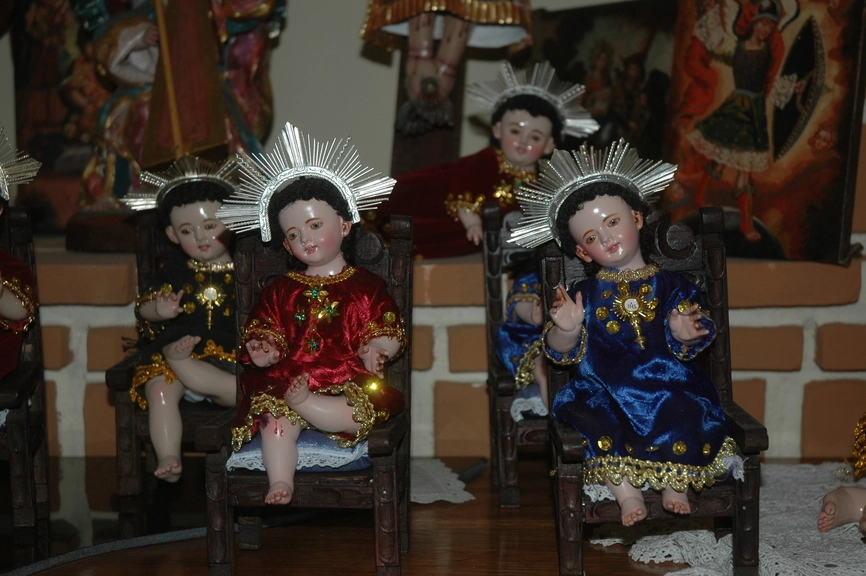
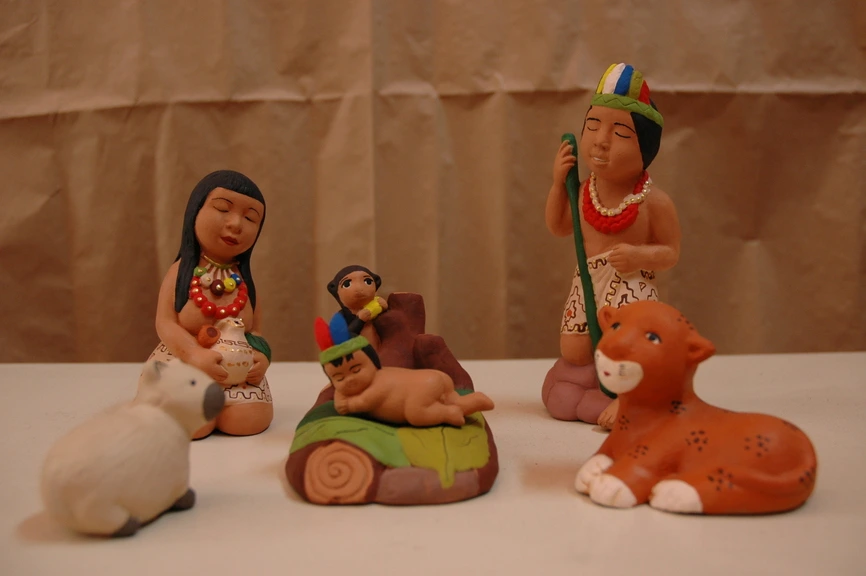
A Peruvian Christmas — Andean and mestizo, coastal and Amazonian. Changes, many changes; so many that even Jesus “stopped being Jesus and became the Child God, Tayta Dios or Manuelito… and not only that: through his contact with the Andes his skin darkened, his curls did too, he became more mischievous and grew rosy-cheeked from playing so much under the sun”, as I once wrote in a text I keep in my files.
When I was a child, and Father Christmas was still a secondary figure at Christmas, my parents would have me write a little letter to the Child God. In that note, written with the letters I had only just learned to trace, I would put the name and description of the toy I wanted as a gift. When I finished, I wouldn’t place it under a plastic tree, but at the feet of the Apus in the nativity scene.
Yes, because in Peru “Manuelito”, or the Child of the Thorn, is born among sacred mountains, among protective mountains. That is one of the differences from the original nativity inspired by Saint Francis of Assisi in 1223, in the town of Greccio, Italy. That scene showed only Jesus’ family, an ox, a donkey and a group of shepherds from Bethlehem.
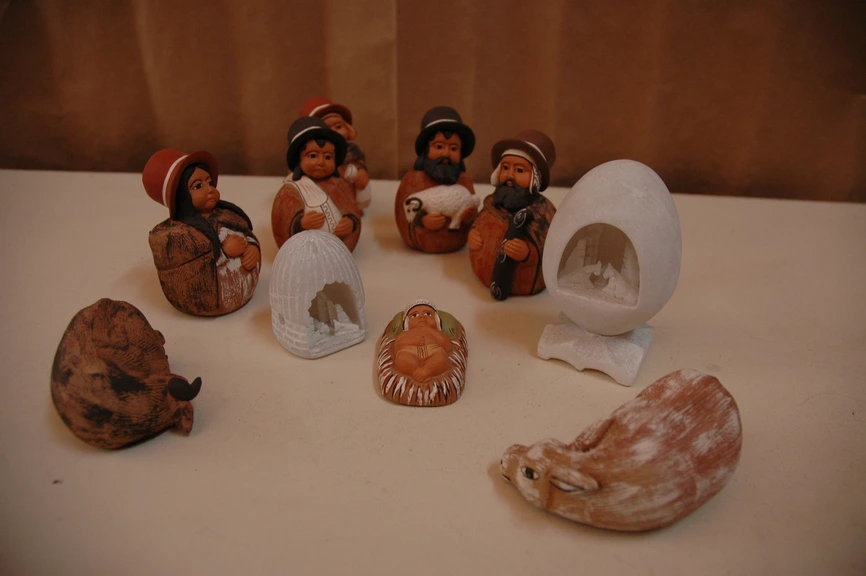
It goes without saying that in Peru — and in Lima in particular — many additional figures were incorporated. In a text I found in my files it is noted that “the first nativity scenes in the Peruvian capital were made by skilful artisans from Huancayo, Huamanga and Cusco; they took on clearly national features, and were crafted using wood, Huamanga stone and even scraps of cloth”.
Little by little, in the homes of old Lima, the Three Wise Men began to appear, along with other characters such as the tamales seller, the baker, the ice-cream vendor or the jasmine seller. The inventiveness was such that even the woman who ironed the Child’s nappies was included. Biblical scenes were also recreated, such as the Flight into Egypt, Noah’s Ark and the Sacrifice of Abraham.
Enjoy your meal
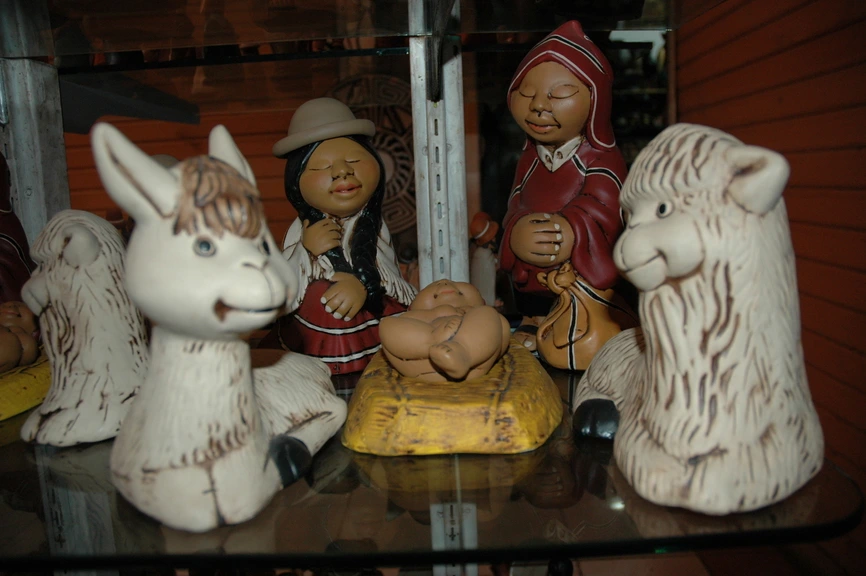
Times gone by, times long past. Christmas today is more globalised. There are trees topped with tufts of artificial snow — an absurdity, considering that in Lima it barely rains at the best of times — reindeer, sleighs and an abundance of multicoloured lights. Santa Claus, or Father Christmas, is now as important as, or even more important than, the Christ Child, and gifts have come to replace or overshadow prayers and carols.
This process of change is nothing new. Back in 1935, the writer José Gálvez Barrenechea lamented that “the days of the traditional Christmas Eve… all that colourful, genuinely homely charm was transformed by growing cosmopolitanism, thus robbing our Christmas festivities of their distinctive character”. Clear and forceful words, published in his book Estampas Limeñas.
Evocative and perhaps even nostalgic, Gálvez — born in the Andean city of Tarma in 1885 and who died in Lima in 1957 — recalled that “the celebrations for the birth of Jesus began on 7 December, with a tribute to the Immaculate Conception. On the 13th, the feast of Saint Lucy, the ‘little wheats’ were sown, an essential feature of any nativity scene worthy of the name. On the 15th, the novena of aguinaldos would begin.”
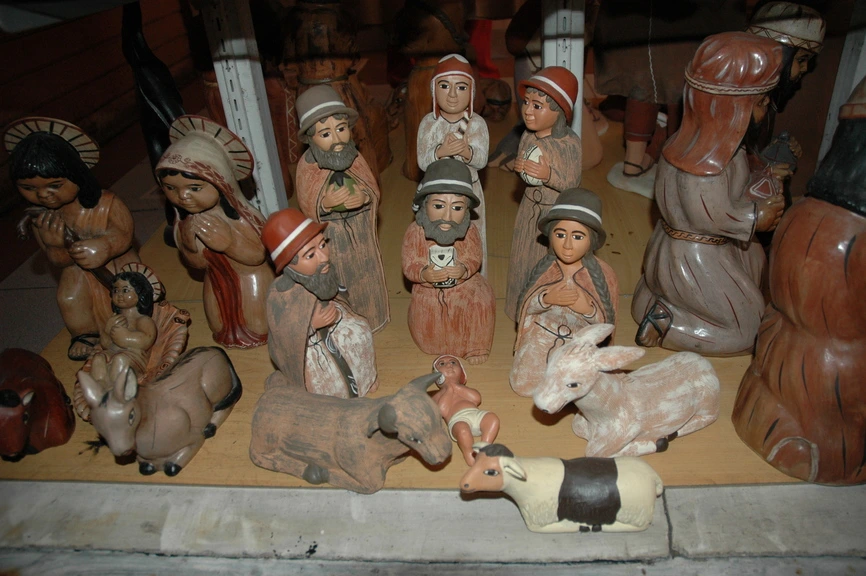
On the night of the 24th, the nativity scene was finally unveiled and, as mentioned earlier, it was a true outpouring of imagination. The occasion called for the presence of family and friends and included prayers and acts of devotion. Music and dancing would follow, and since dancing warms you up and sharpens the appetite, dinner was a hearty affair. As you might expect, it also featured more than a few toasts to the Virgin Mary’s little baby.
In his tradition “The Month of December in Old Lima”, the writer Ricardo Palma recounts that roast suckling pig and tamales were indispensable on the tables of the past. And although both are still enjoyed in many households today, turkey now appears more often at Christmas dinners. The same goes for champagne or sparkling wine. In earlier times, red wine, sherry and pisco were the real stars of the celebration.
Three Kings’ Day
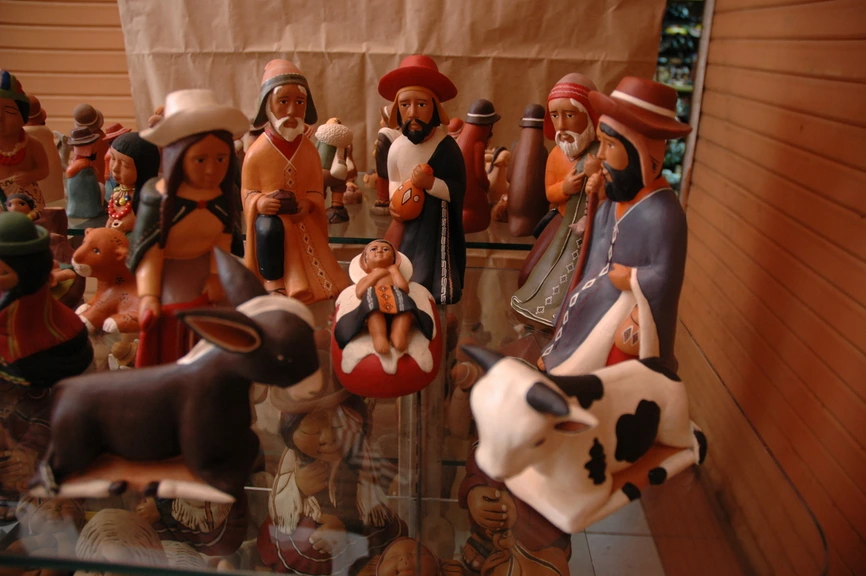
“City of the Kings” was the name Lima received when it was founded by the conquistador Francisco Pizarro on 18 January 1535. Those kings were not the Spanish monarchs, but Melchior, Gaspar and Balthazar, the rulers from the East who, guided by the Star of Bethlehem, visited the Christ Child a few days after his glorious birth.
The closeness of the city’s founding date to the celebration known as the Three Kings’ Day (6 January) explains the original name of the Peruvian capital. That coincidence, combined with the deep religiosity of Lima’s inhabitants, turned the celebration into the perfect closing of the Christmas festivities. As the years and decades passed, however, the Three Kings gradually lost their prominence.
Although the Metropolitan Municipality still organises an annual re-enactment of the Three Kings’ Day, the custom has almost disappeared from private homes. Those with long memories recall that horses, elephants and camels—the animals that carried the Kings—were once placed in front of the most elaborate nativity scenes in each neighbourhood. Proudly, homeowners would throw their doors wide open.
Everyone was welcome. Chicha de jora and chicha morada were offered, and then three couples were chosen to act as godparents. They would symbolically “bring down” the Kings, leaving money as they did so. Afterwards, the other figures in the nativity scene were also “brought down” or, more accurately, removed. Manuelito was the last to be taken away. That moment was known as the descuelgue.
The descuelgue now belongs to the past. It happens—customs change or reinvent themselves. What remains alive in Lima is the spirit of togetherness and love that lies at the heart of Christmas. Because beyond the gifts, the dinner and the toasts, what truly matters is coming together as a family and asking Jesus, the Son of God, to bless and protect us. Merry Christmas to everyone!
December 23, 2025